Clovis Artificial Grass logo
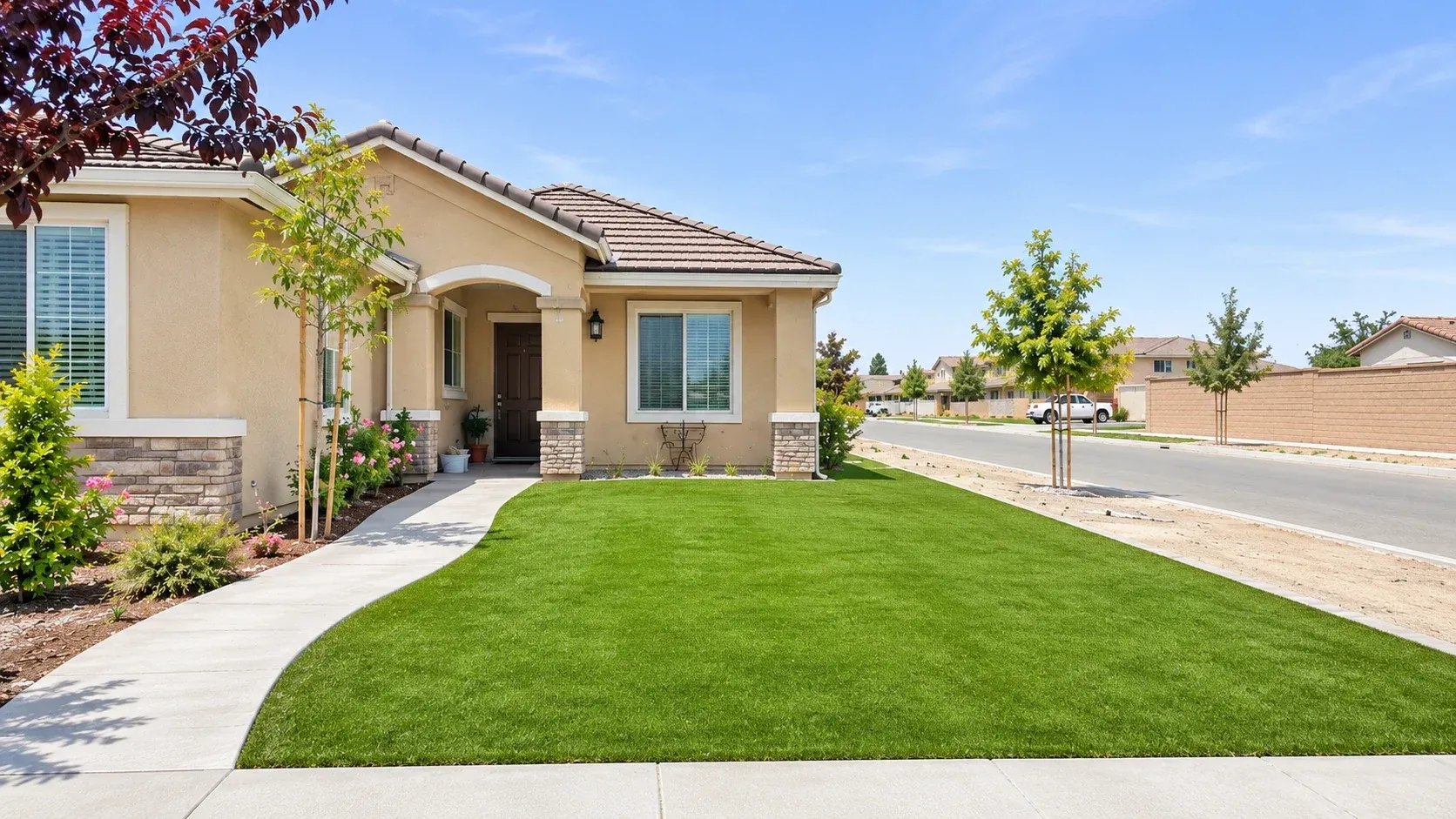
A finished artificial grass front lawn with a curved concrete walk leading to a single-storey stucco home with a tile roof.

Clovis Artificial Grass: Lawns and Yards, Putting Greens and Pet-Friendly Grass for Residential & Commercial Properties

Transparent, Itemized Pricing

We offer a free on-site visit and provide an itemized breakdown of grass grade, base depth, and labor, so you know the full price upfront. Our artificial grass projects generally cost between $6,000 and $35,000, with a standard deposit of 30% to 50% to get started. We also offer financing options with little to no money down.

Warranty-Backed, Built to Last

We back every installation with our own 2-year labor and workmanship warranty, plus the manufacturer's 11- to 15-year product warranty since we're a certified installer. That combination reflects the quality we put into every job, so you can feel confident your grass will look great and hold up for years to come.

Base Preparation Prioritized

Getting base preparation right is the most critical part of any installation, and we spend the time making sure it's done properly. Choosing the right underlayment and packing the correct base material, especially through Clovis's dense hardpan clay, is what keeps your grass looking good and lasting through every season instead of pooling water or buckling within a year or two.

Grass Options for Every Yard

Clovis Artificial Grass carries 15 different types of artificial grass to meet your specific needs, including pet-grade turf, nylon putting-green turf, and standard residential and commercial grades. We help you pick the right one for your project instead of defaulting to whatever's easiest.

Licensed and Insured

We carry full licensing and insurance on every project, with zero incidents on record. From front yards and putting greens to pet runs, pool areas, playgrounds, and commercial properties, your property stays protected throughout, and we treat every yard like it's our own.

Conference-Trained, Every Year

Our team has attended the Synthetic Turf Council's Annual Conference every year for the last 10 years, staying current on the latest installation and base preparation techniques instead of relying on outdated methods. That ongoing training is what lets us bring the best materials and the best techniques to your project every time we show up to work, building the most durable, longest-lasting installation your yard can get.

Get a Free Estimate

License #1046023

Recent Artificial Grass Projects in Clovis, CA

  • Clovis, CA

    Front and Back Yard Grass Conversion in Clovis, CA

    Before
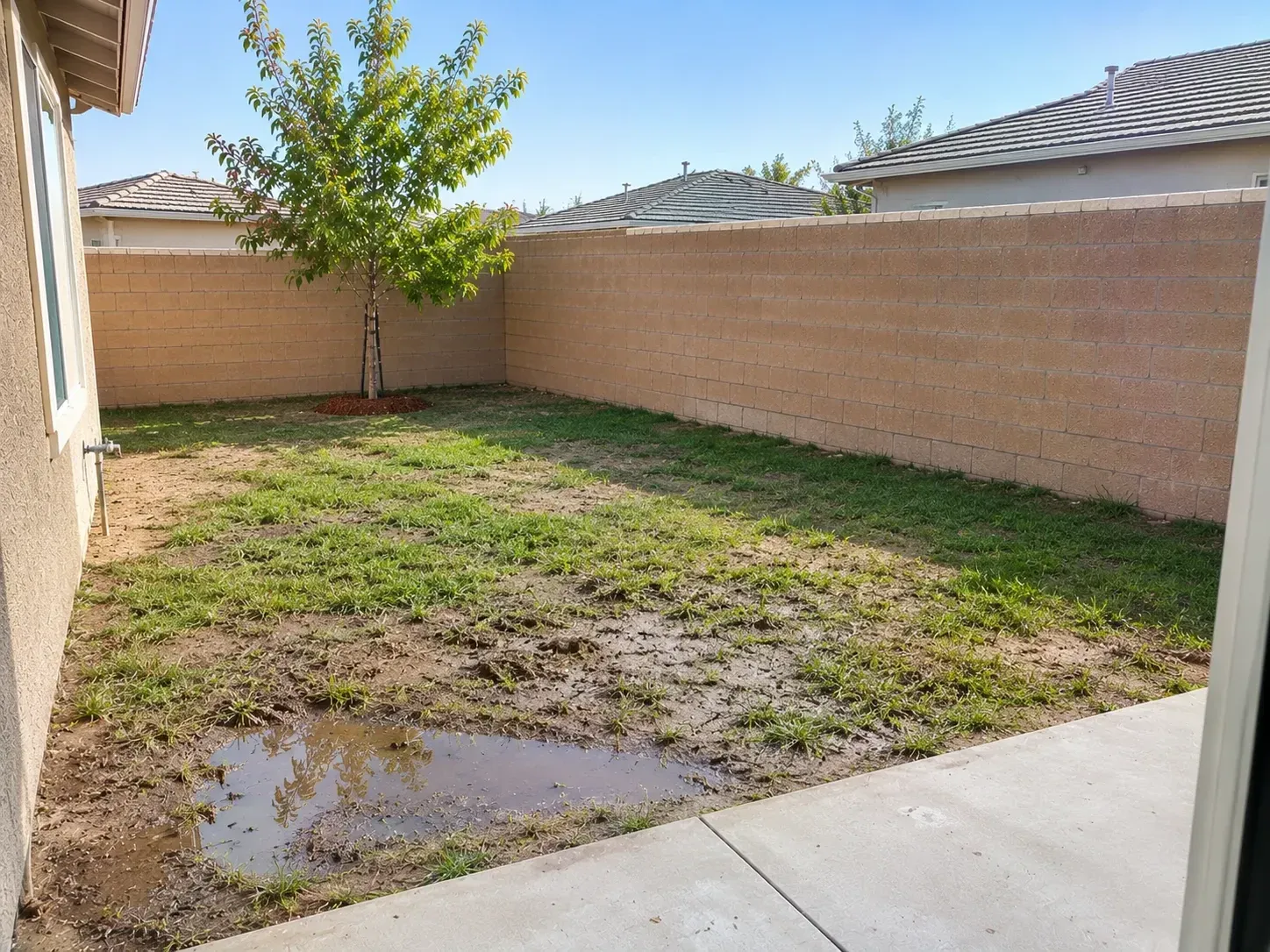
    A patchy backyard lawn with bare clay and a puddle of standing water by the patio, enclosed by a tan block wall with a young tree in the corner.
    After
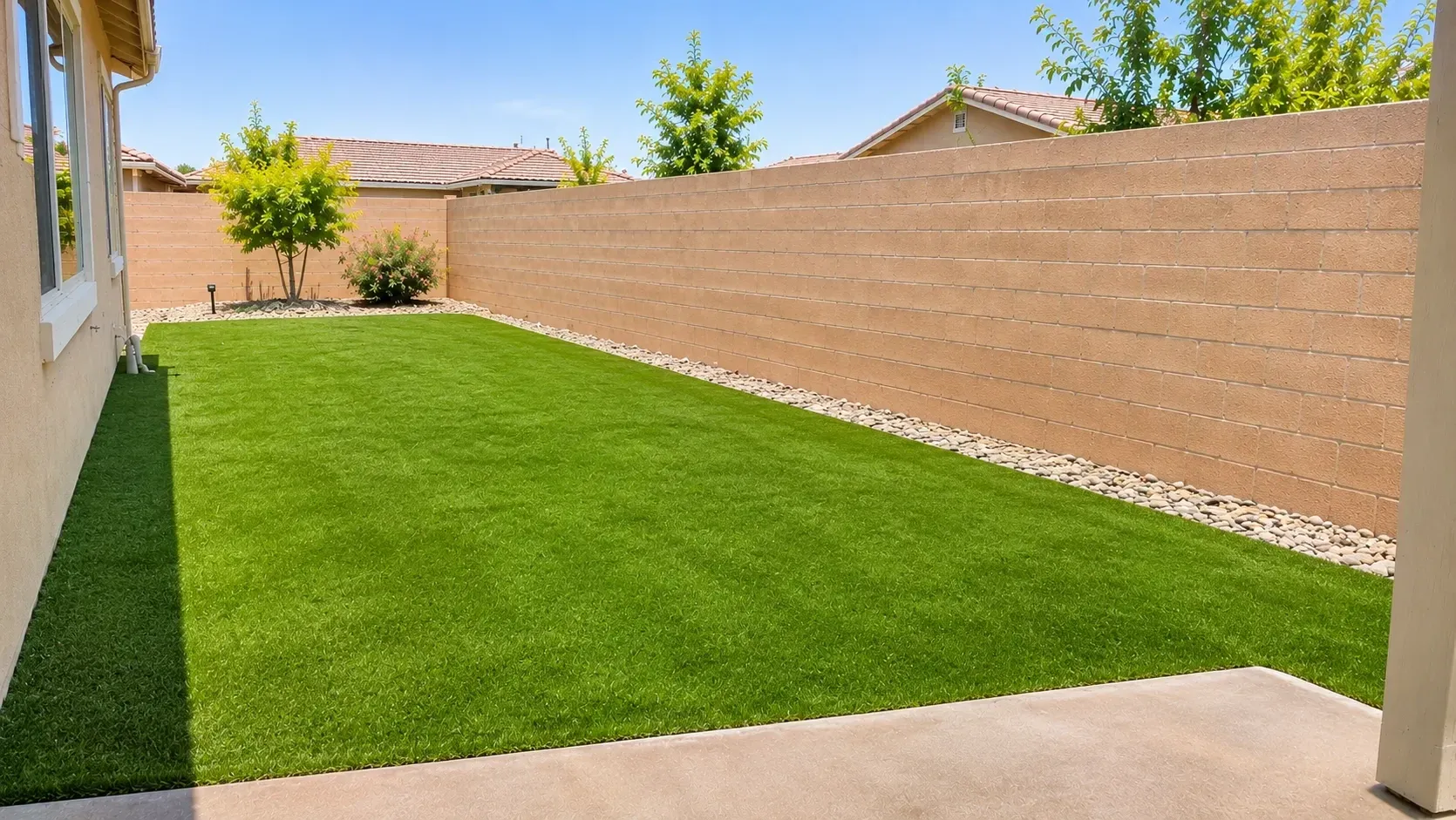
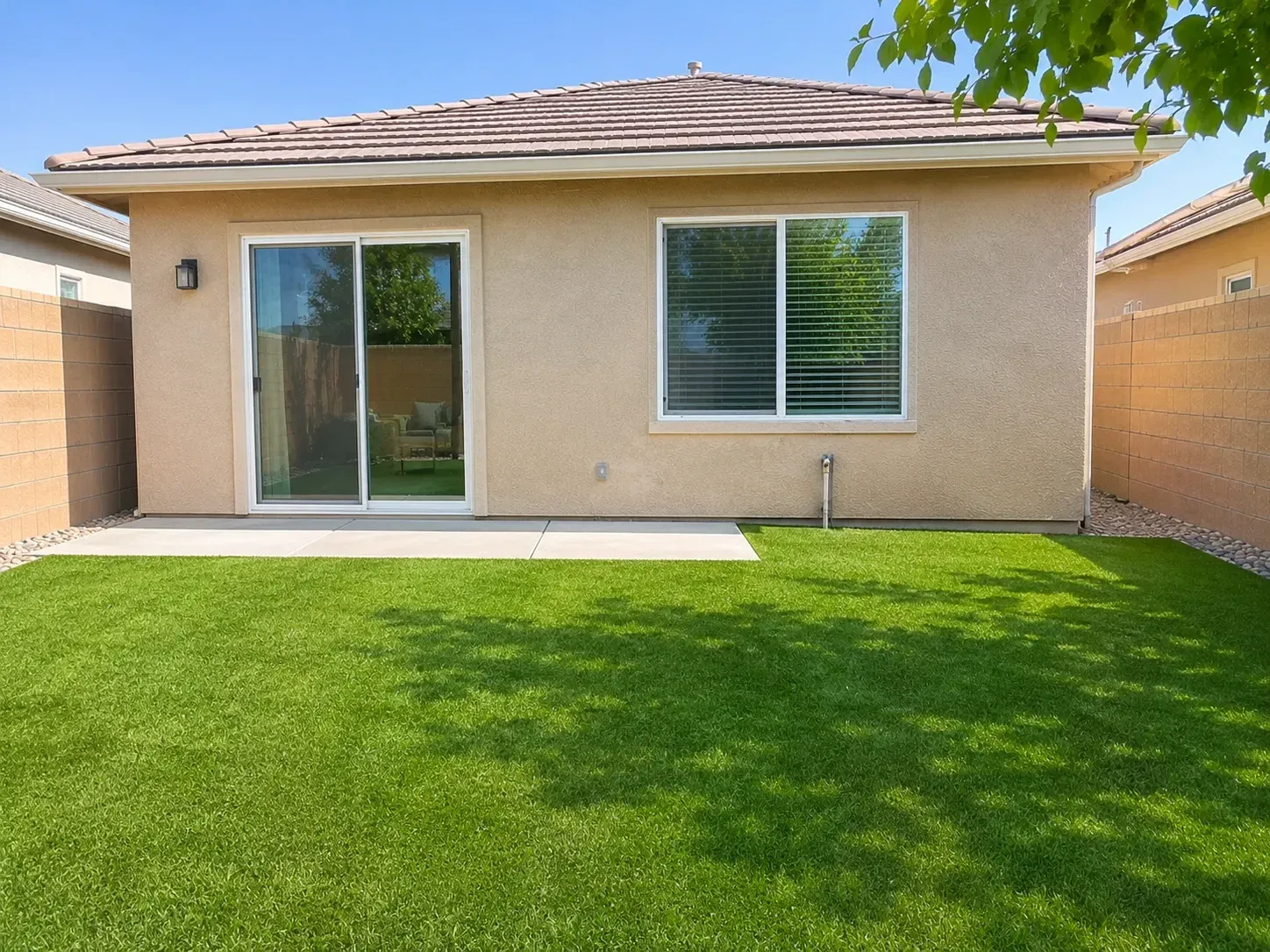
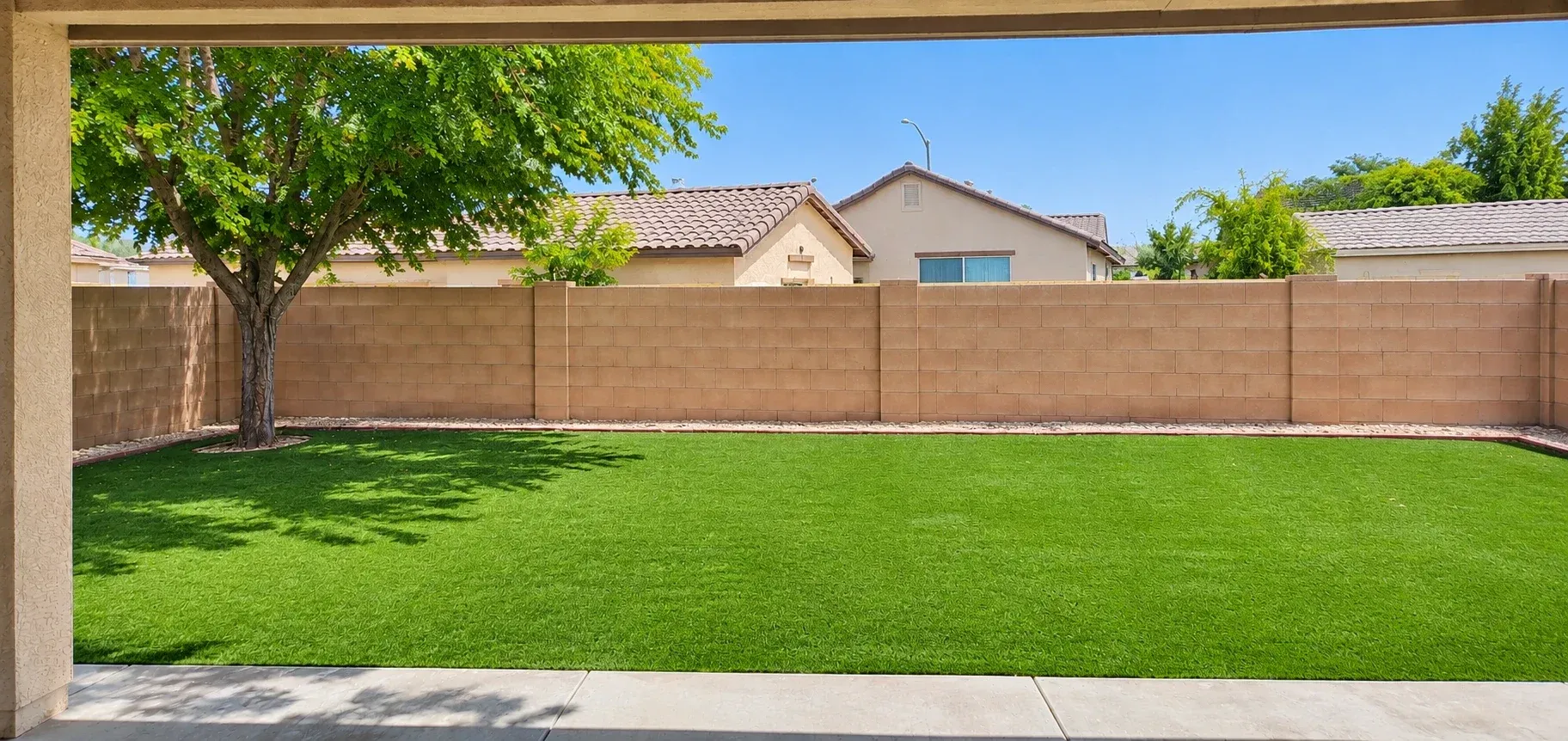
    The same backyard after installation: a wall-to-wall artificial grass lawn in front of the stucco home's patio and sliding door, between tan block walls.

    Project: This Clovis yard had been patchy and hard to maintain for years, with hardpan clay underneath that kept pooling water every time it rained. The crew graded through that hardpan layer, built a full 720-square-foot base, and had a dual-blade residential lawn down and seamed within two days. The family was using the new yard for weekend gatherings the same week it was finished.

    Project Value:$8,600

  • Fresno, CA

    Pet Grass and Dog Run Installation in Fresno, CA

    Before
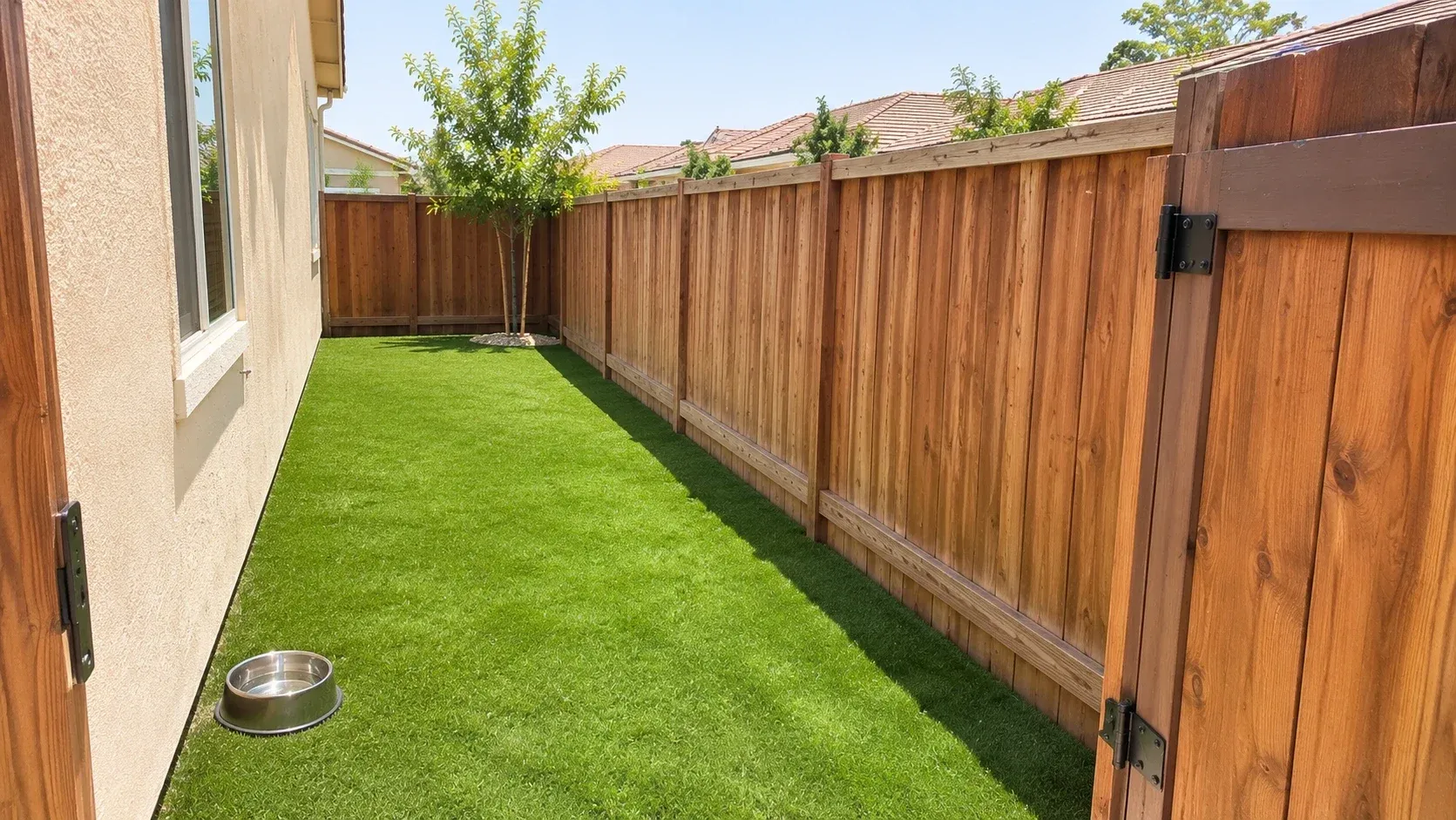
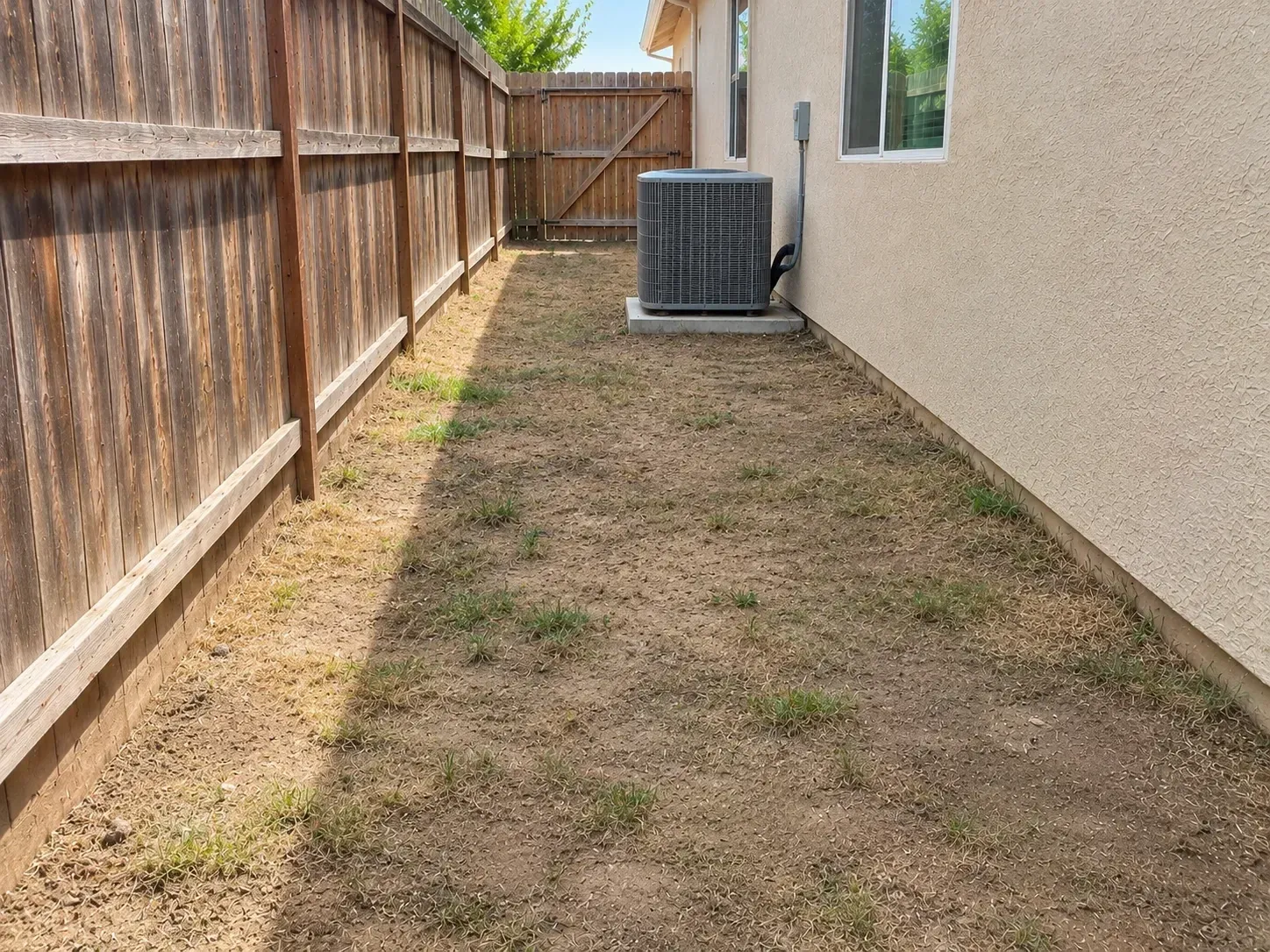
    A narrow side yard of bare, cracked dirt with a few tufts of grass, between a wood fence and a stucco house wall with an air-conditioning unit.
    After
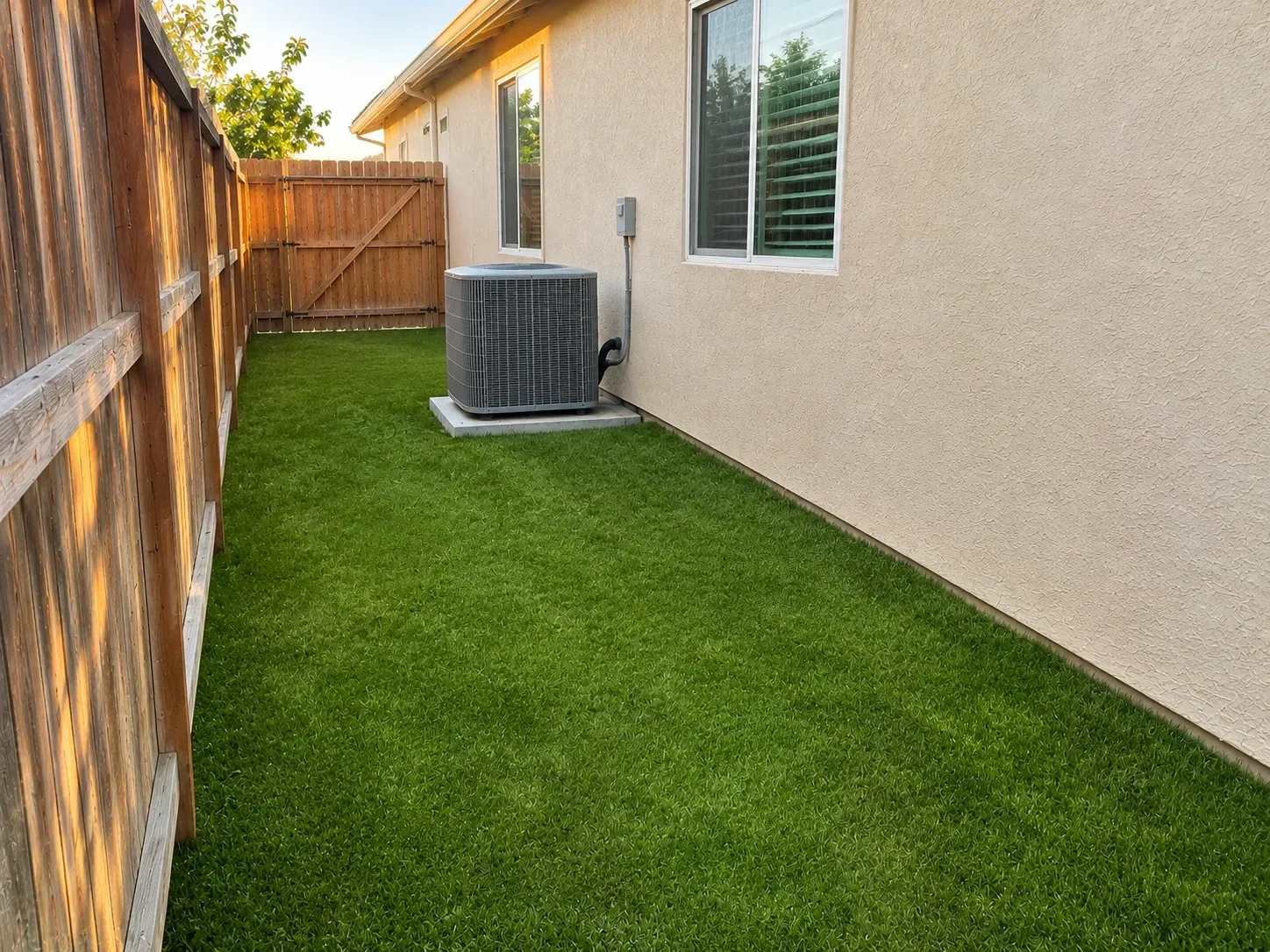
    The same side yard after installation: artificial grass running from the wood fence to the stucco house wall, trimmed around the air-conditioning unit.

    Project: A Fresno homeowner's side yard turned to mud every time their two dogs went outside, no matter how many times they reseeded it. The crew installed a 400-square-foot pet-grade area with a perforated drainage backing and zeolite infill for odor control, finished in a single day. The homeowner reported zero odor complaints through the following summer.

    Project Value:$6,900

  • Clovis, CA

    HOA Common-Area Grass Conversion in Clovis, CA

    Before
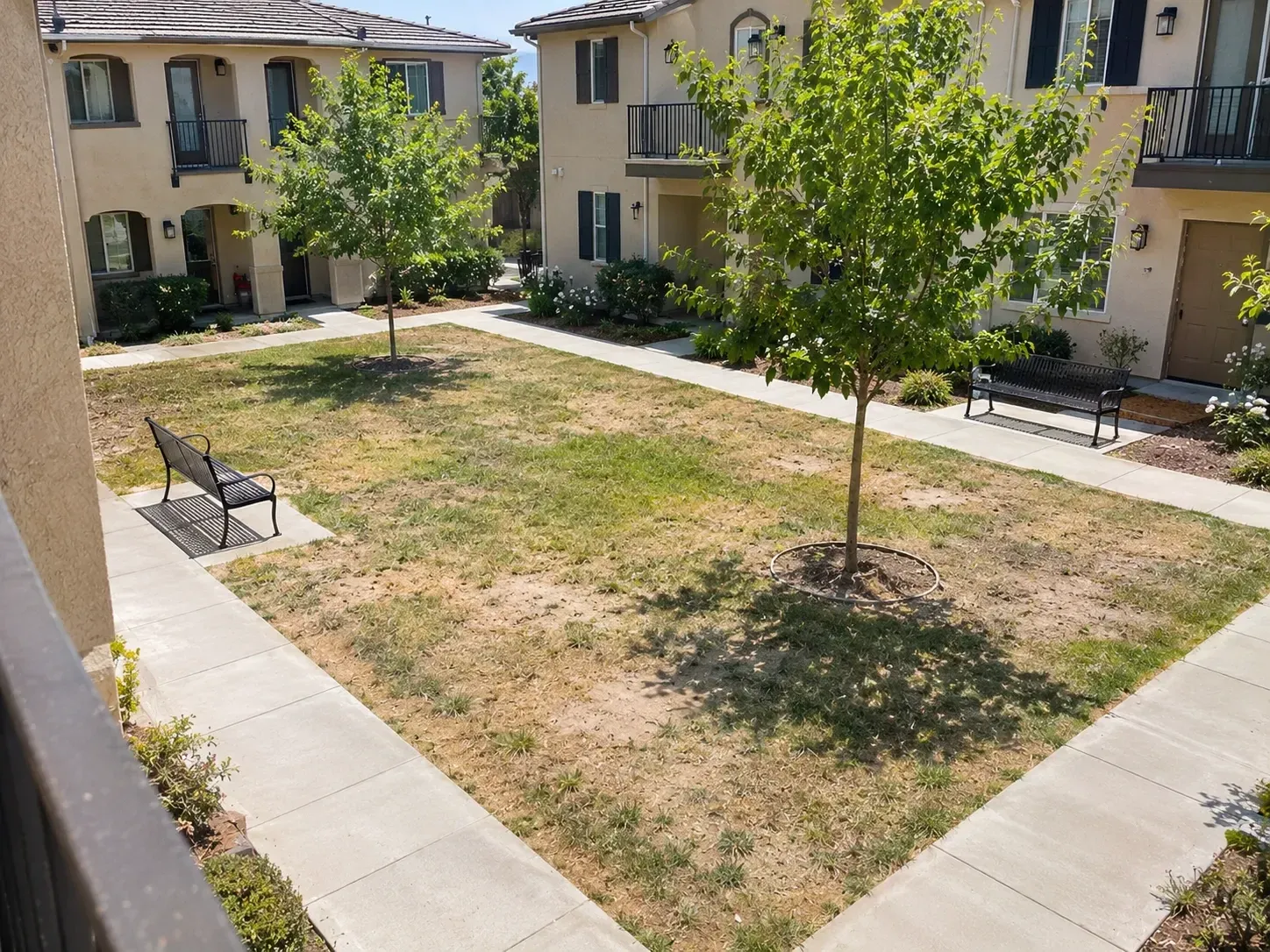
    An HOA courtyard before installation, seen from above: a thin, yellowed lawn with bare patches between concrete walks, benches and young trees.
    After
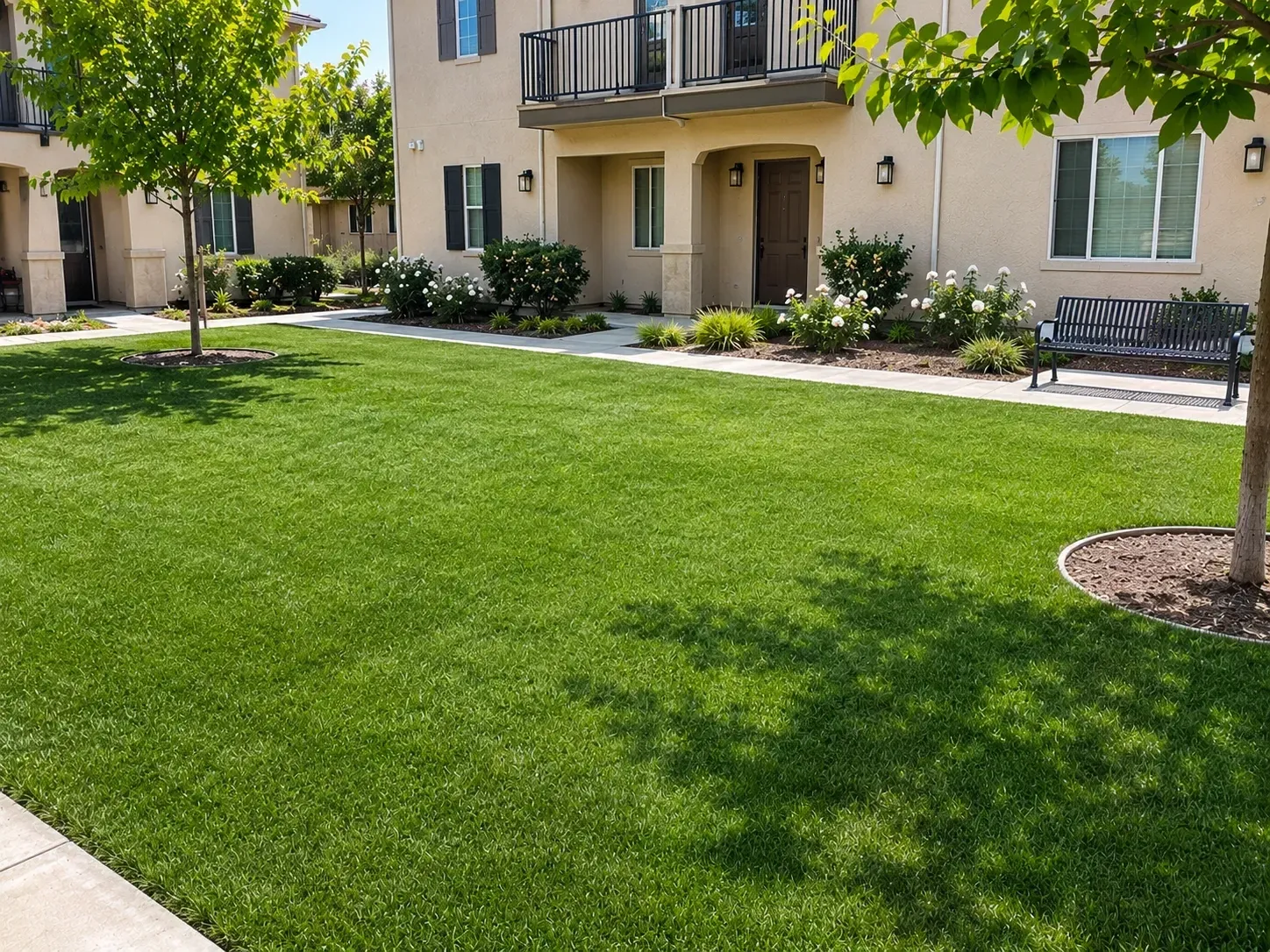
    An HOA courtyard after installation: a broad artificial grass lawn flush to the concrete walks, with a bench and young trees in front of two-storey stucco townhomes.

    Project: A Clovis HOA had been reseeding a shared courtyard lawn every spring for years with the same disappointing results each summer. The crew installed 2,100 square feet of commercial-grade grass on a reinforced base built for daily foot traffic, with the architectural review submission and approval handled as part of the job. The project wrapped in four days with minimal disruption to residents.

    Project Value:$21,500

  • Sanger, CA

    New-Build Full-Yard Grass Installation in Sanger, CA

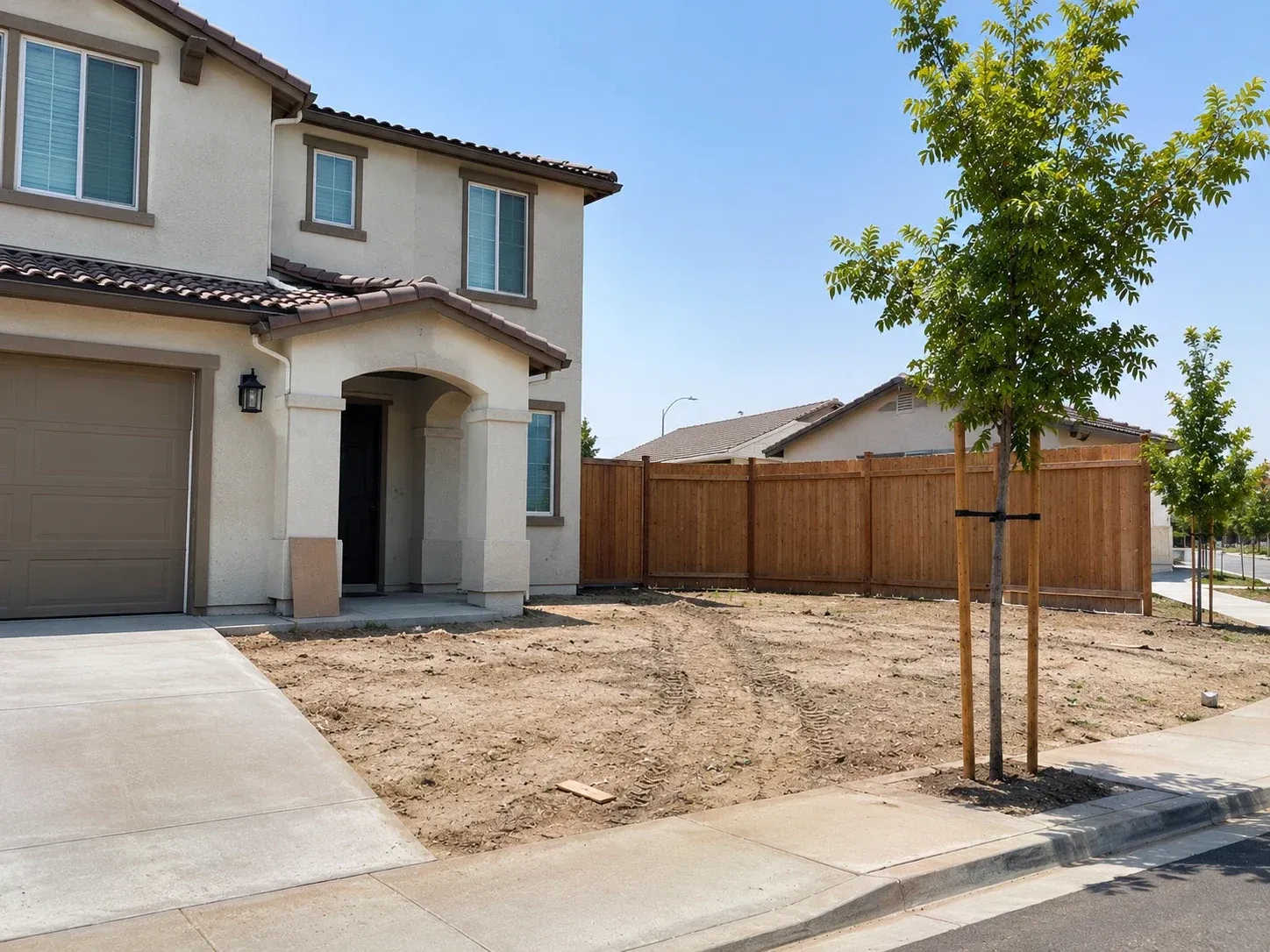
    Before
    A new two-storey stucco home with a front yard of bare, compacted builder's dirt and tyre tracks, a staked young tree at the curb and a new wood fence.
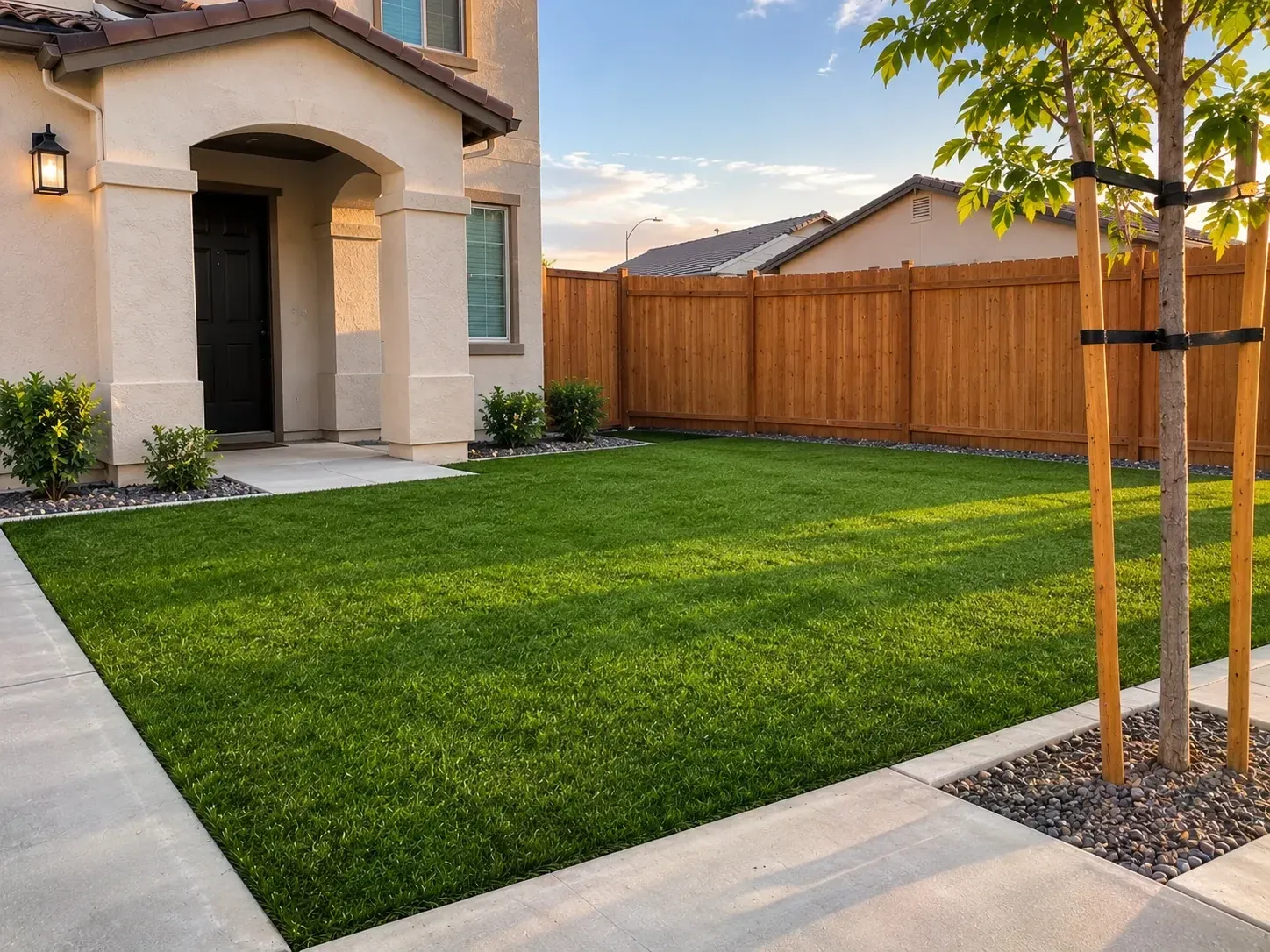
    After
    The same new home after installation: a finished artificial grass front lawn with gravel beds at the arched entry, a wood fence and a staked young tree.

    Project: A new-build home in Sanger was left with nothing but bare, compacted dirt by the builder, standard for new construction in the area. Starting from scratch, the crew built out a full 1,200-square-foot front-and-back installation, base and all, finishing ahead of the family's move-in date.

    Project Value:$13,400

  • Fowler, CA

    Custom Putting Green Addition in Fowler, CA

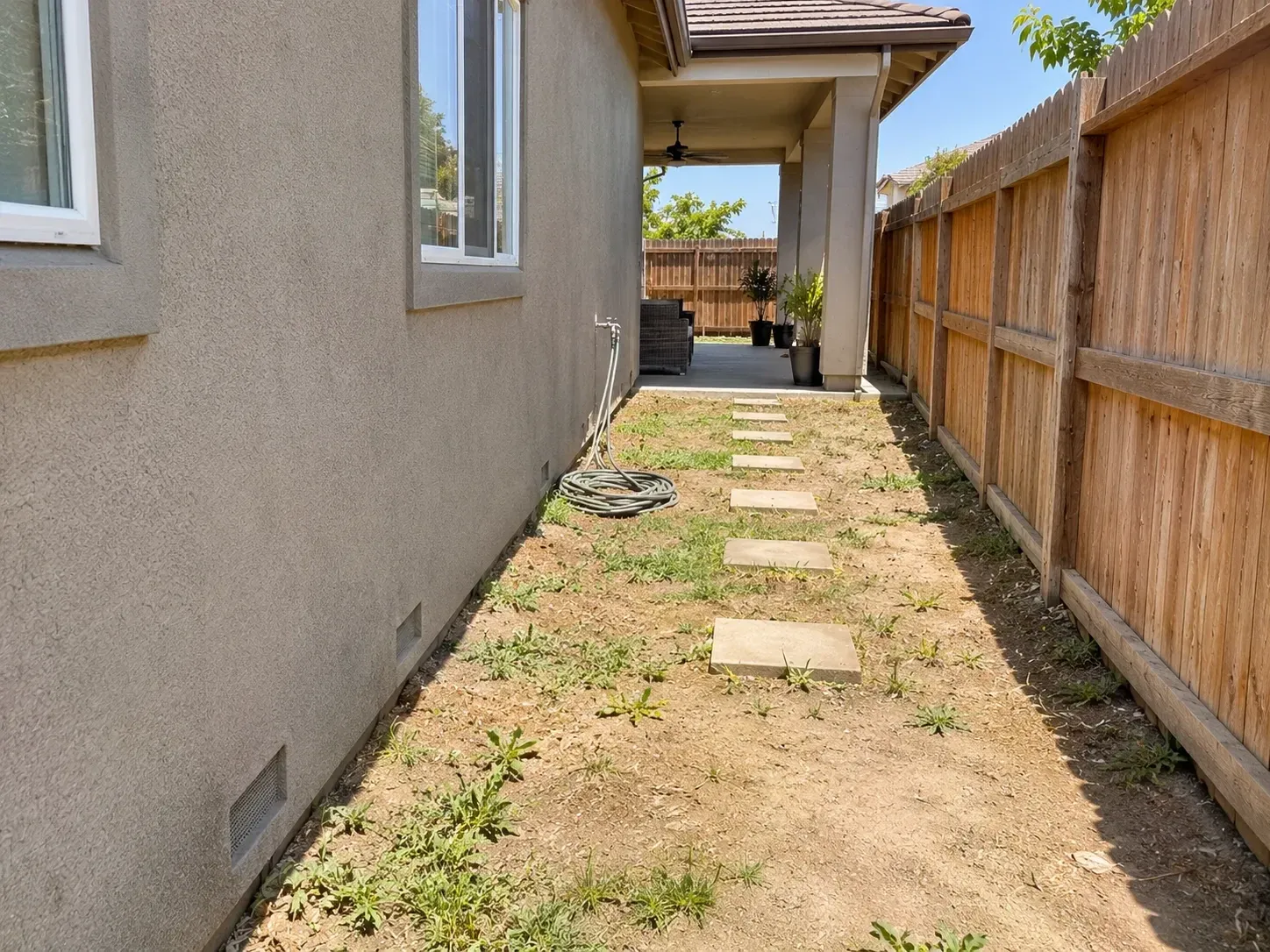
    Before
    An unused side yard of dry dirt and weeds with a line of stepping stones and a coiled hose, between a stucco house wall and a wood fence, leading to a covered patio.
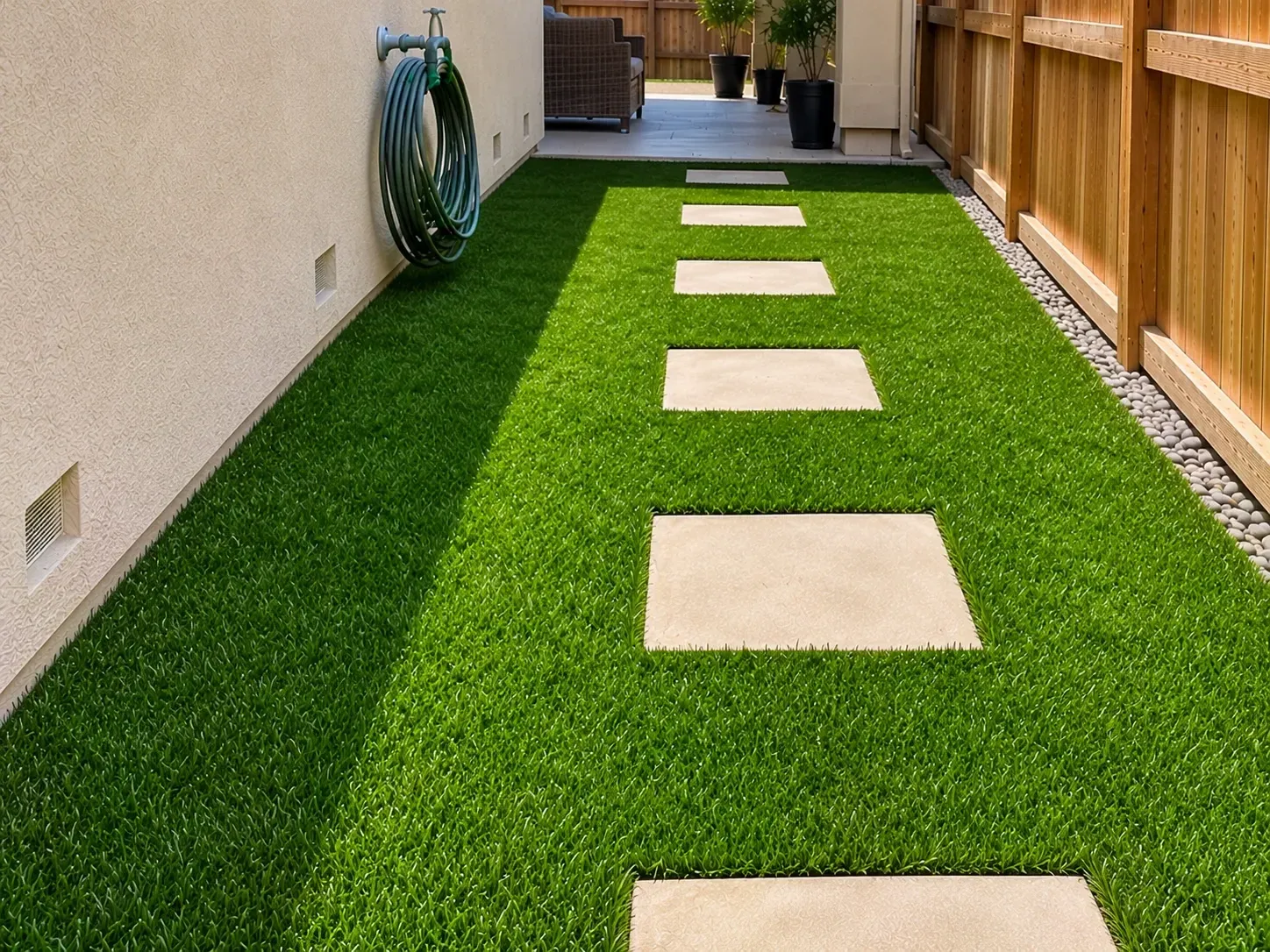
    After
    The same side yard after installation: artificial grass with a line of square stepping stones between the stucco house wall and the wood fence.

    Project: A side yard in Fowler had sat unused for years until the homeowner asked about a putting surface instead of more lawn. The finished 350-square-foot nylon green includes two real cups, graded on a slope tight enough that a ball tracks true across it, and it's turned into part of his regular weekend routine.

    Project Value:$12,200

Artificial Grass Installation for Residential and Commercial Properties in Clovis, CA

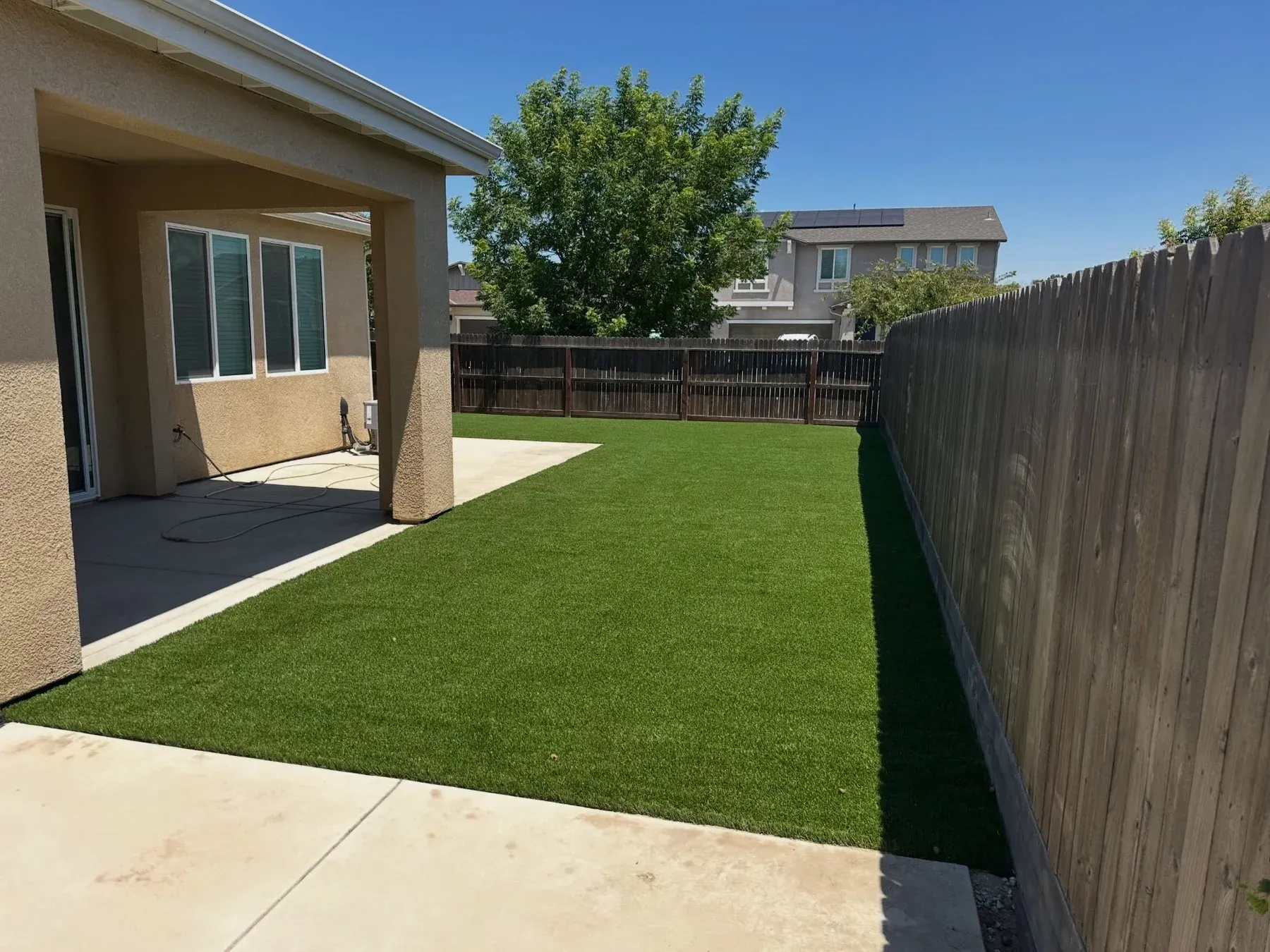
A finished artificial grass backyard lawn beside the covered patio of a stucco home, bordered by wood fences with a concrete walk in front.

Front and Back Yard Grass

A struggling lawn is usually the reason someone calls us in the first place, and converting it is still the job we hear from Clovis homeowners most often. We remove the existing sod or soil 2 to 4 inches deep, then grade through Clovis's hardpan clay before building a compacted Class II road base at least 2 to 3 inches deep, so the finished yard drains instead of holding water in low spots.

A 4-ounce weed-barrier fabric comes next, laid down before the grass itself goes in, cut and seamed so the joints blend into the surface rather than standing out. Infill follows last, matched to that product's pile height and typically running 1 to 2 pounds per square foot, and the whole yard is ready to walk on before the crew packs up for the day.

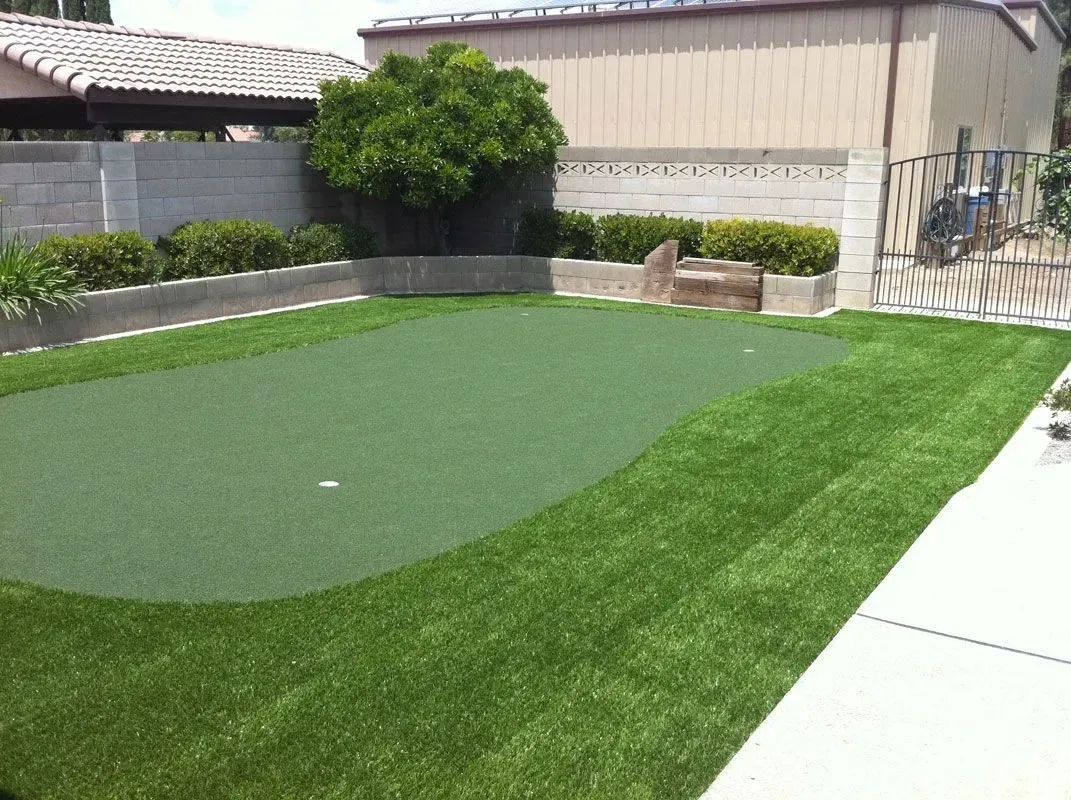
A shaped backyard putting green with three cups set into an artificial grass lawn, bordered by block walls, shrubs and an iron side gate.

Putting Greens for Backyards

A backyard putting green doesn't start the way a lawn does. The surface uses a nylon face fiber instead of the polyethylene blend found in standard grass, since nylon holds its shape under a rolling ball instead of flattening out over time, which is also why putting-green grass costs more per square foot than a lawn installation.

We typically spec a face weight in the 34-to-60-ounce range for these builds, and the sub-base gets graded tighter here than on a standard lawn job, since even a shallow low spot throws off how a ball rolls. Cups, a break in the slope, or a fringe collar in a contrasting color are all available add-ons, something we walk through during design rather than leaving as an afterthought.

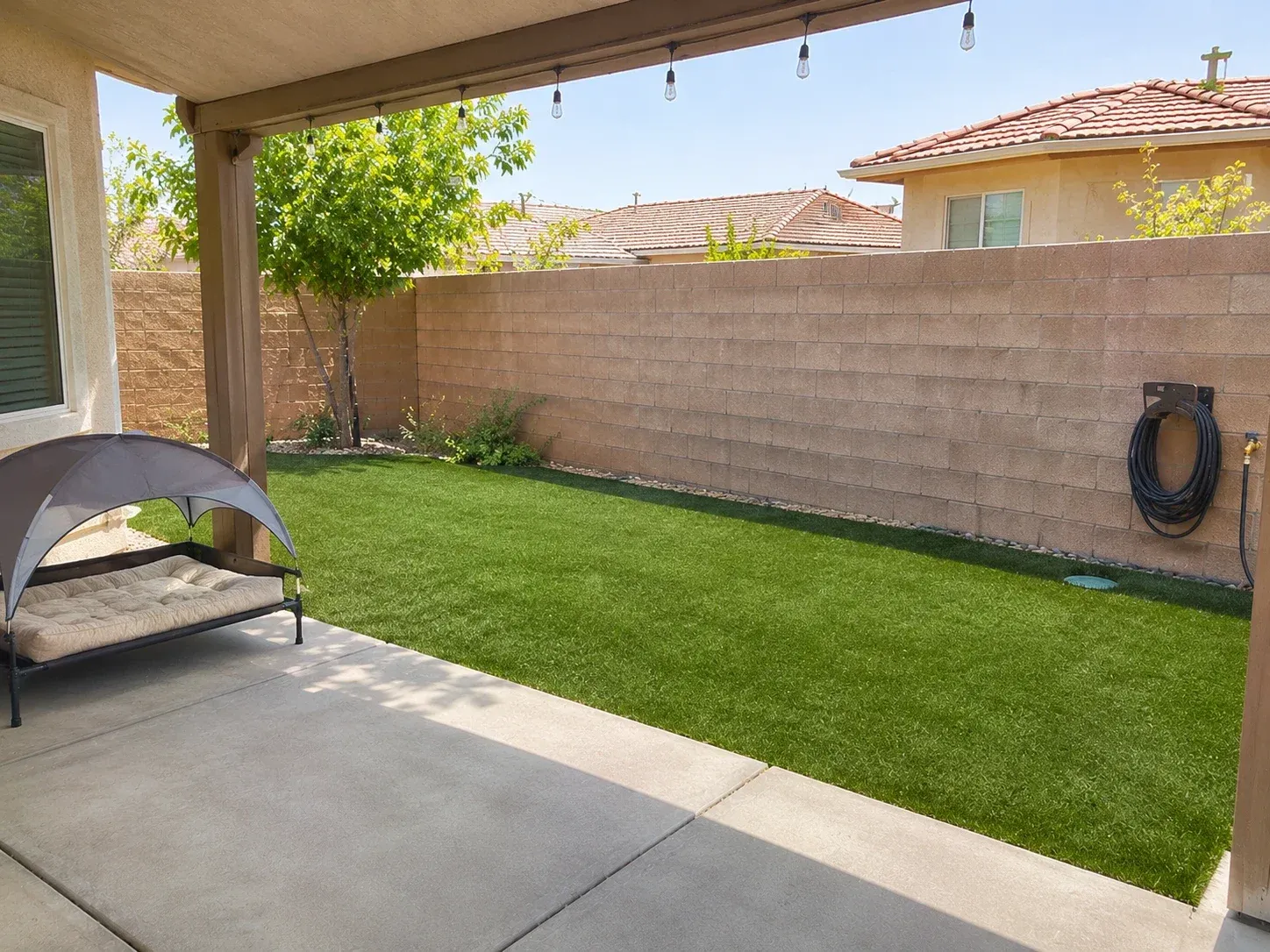
A backyard pet area of artificial grass along a tan block wall, with a shaded dog bed under the patio cover and a coiled hose on the wall.

Dog-Friendly Grass and Pet Areas

A pet area has to account for how dogs actually use a yard, not just how the finished space looks in photos. We start with a fully perforated backing that drains across the entire surface rather than relying on seam gaps, paired with zeolite or antimicrobial-treated infill built specifically to control odor.

A dog that runs the same loop or digs in one spot year after year puts localized stress on a yard that a standard lawn base doesn't have to withstand, so we compact to the same spec as a lawn and build in more drainage capacity underneath for the extra moisture. Picking up solid waste stays the owner's responsibility day to day; we say that plainly at the walkthrough. Fenced backyards are common across Clovis, which keeps this a steady category of request for us.

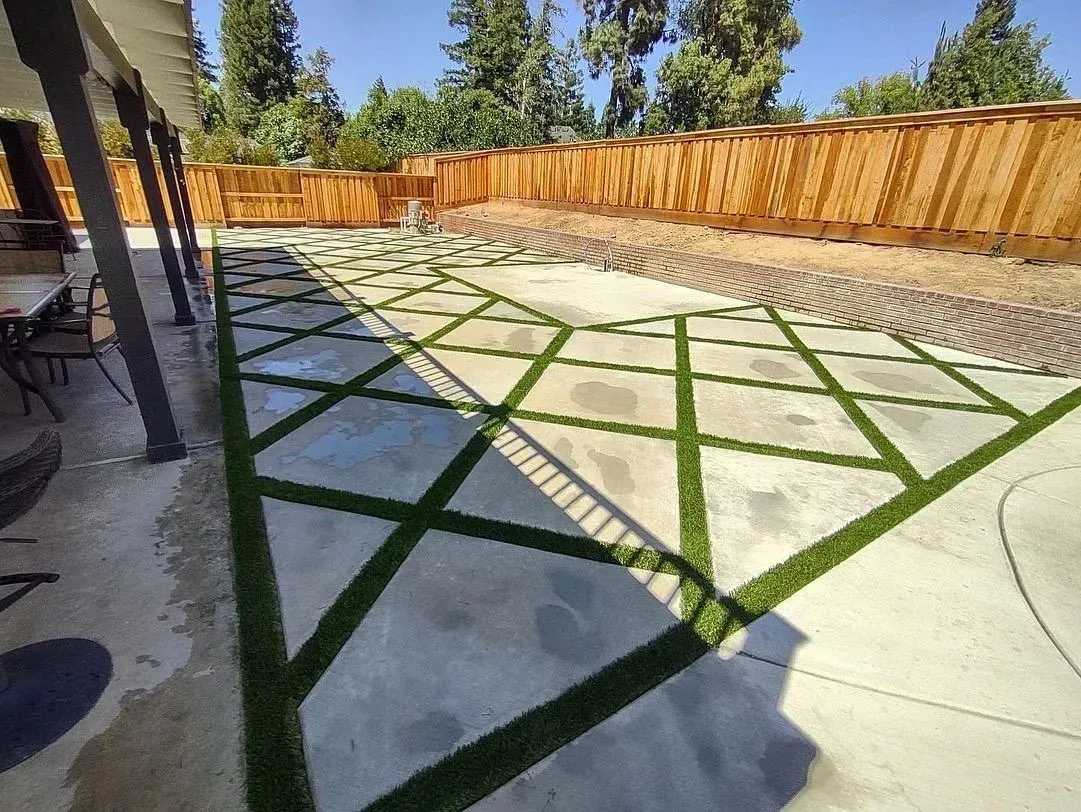
Concrete patio pads divided by a diamond grid of artificial grass strips, beside a covered patio with a new wood fence and low brick wall behind.

Patio and Hardscape Grass

Grass around a patio does two jobs at once: it softens the line where hardscape meets yard, and it fills narrow strips that are genuinely hard to landscape any other way. A clean seam against pavers, stepping stones, or a curved border calls for a shorter-pile product; a taller pile tends to shed loose fibers onto the adjacent hardscape and flattens unevenly wherever people step most.

A smaller footprint doesn't mean a lighter base; we hold to the same grading standard here as on a full yard, hardpan-clay breakthrough included wherever it's present. This is also where we most often blend in decorative gravel or stone alongside the grass, and we'll tell you honestly during the walkthrough whether grass is the right call for a given strip or something else holds up better.

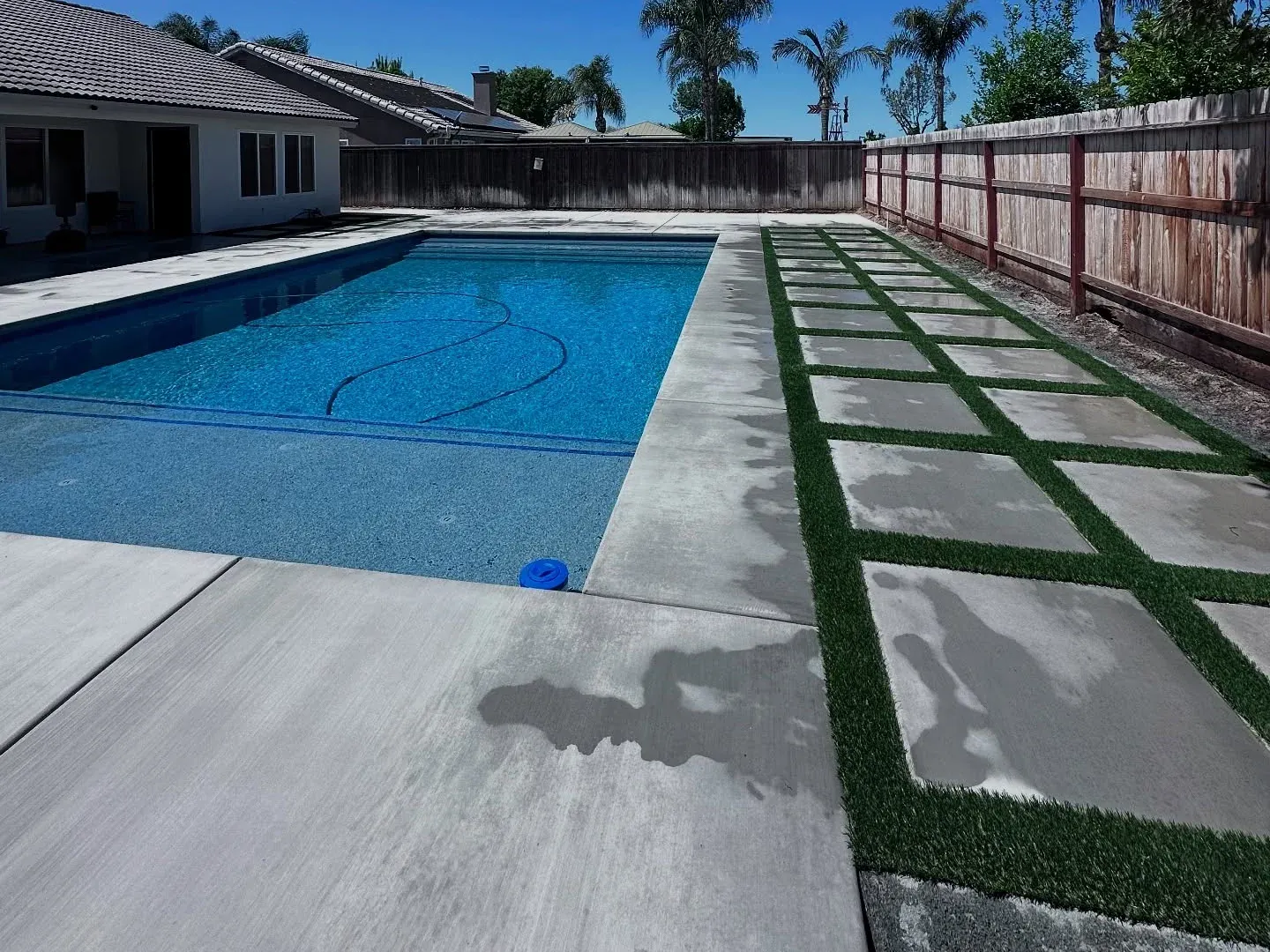
A backyard pool with a concrete deck and a walk of square pavers with artificial grass joints running along a wood fence.

Grass Around Pools and Spas

Grass near a pool or spa takes more punishment than almost any other part of a property: constant sun, sunscreen residue, and chlorinated splash-out with every swimmer. A product rated for near-constant UV and chlorine exposure goes in for this zone specifically, and drainage gets extra attention too, because chlorinated water left sitting on the surface breaks down an ordinary infill faster than everyday foot traffic would.

We also run the pile shorter than our standard lawn spec right around the deck, partly for a tighter visual line at the deck's edge and partly because a lower profile sheds water swimmers track out of the pool more quickly. Raised decks and step-downs get the same careful edge treatment we use on patio borders, so there's no lifted lip anywhere a bare foot could catch.

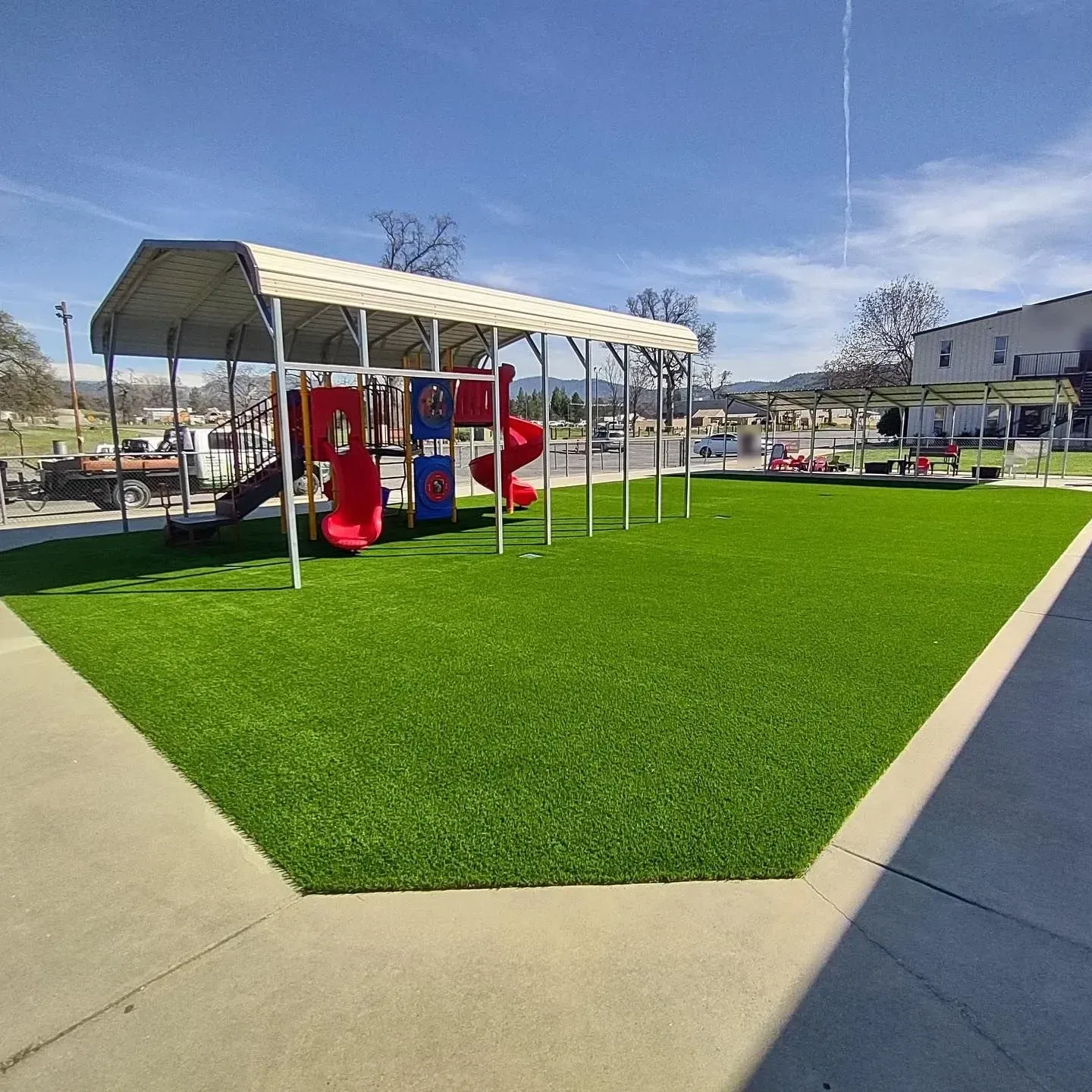
A playground with red slides under a metal shade cover, standing on a large artificial grass play area edged by concrete walks.

Grass for Play Areas and Playgrounds

Play-equipment surfacing has to clear real impact-safety standards, not just pass a visual check. Wherever play equipment is going in, the surface is built to ASTM F1292 and F2075, the pair of standards governing how much shock a surface has to absorb and the critical fall height it has to protect against underneath and around the structure.

We also test infill under ASTM F3496 for PAH content on these jobs, since a kids' play surface is one of the few places where infill composition matters as much as how it feels underfoot. Hitting those numbers almost always means going deeper on the infill bed and choosing a product built for shock absorption first, sized against the real fall height of whatever equipment it surrounds.

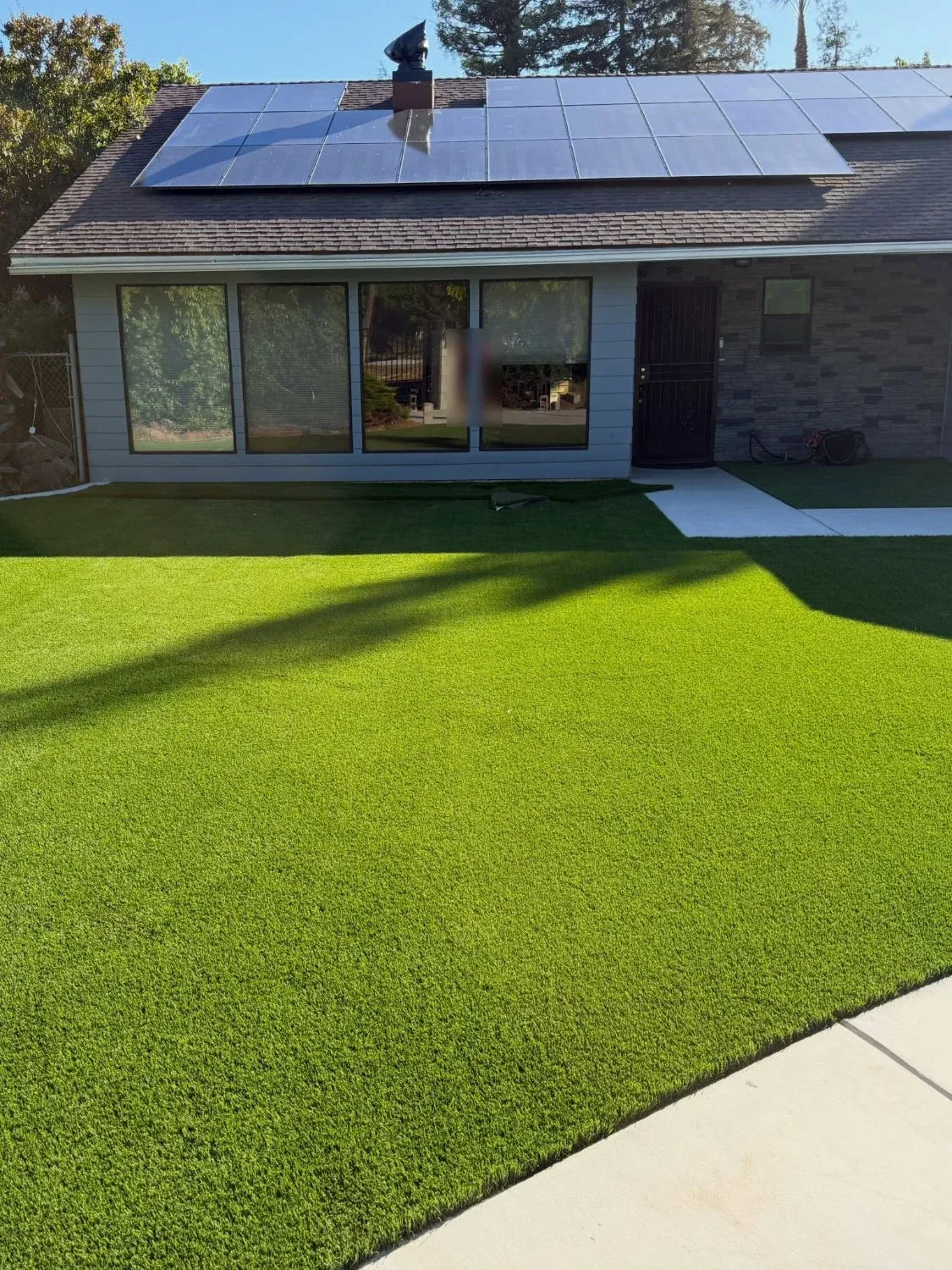
An artificial grass front lawn sitting flush against the concrete entry walk of a single-storey home with solar panels on the roof.

Driveway and Walkway Grass Strips

A bare dirt or gravel gap between a driveway and a fence line is a landscaping gap we get called out to fix often enough throughout Clovis. Strips like this absorb more tire overhang and foot traffic than a backyard lawn is ever exposed to, so we densify and over-compact the base here and choose a grass product rated for that wear level.

Getting the grass to sit flush against a concrete or paver edge matters more on a driveway than almost anywhere else, since a gap along that line is the quickest way an otherwise clean job starts looking sloppy. Walkways in particular get a firmer, shorter-pile product, since the exact same footsteps hit the exact same strip every day.

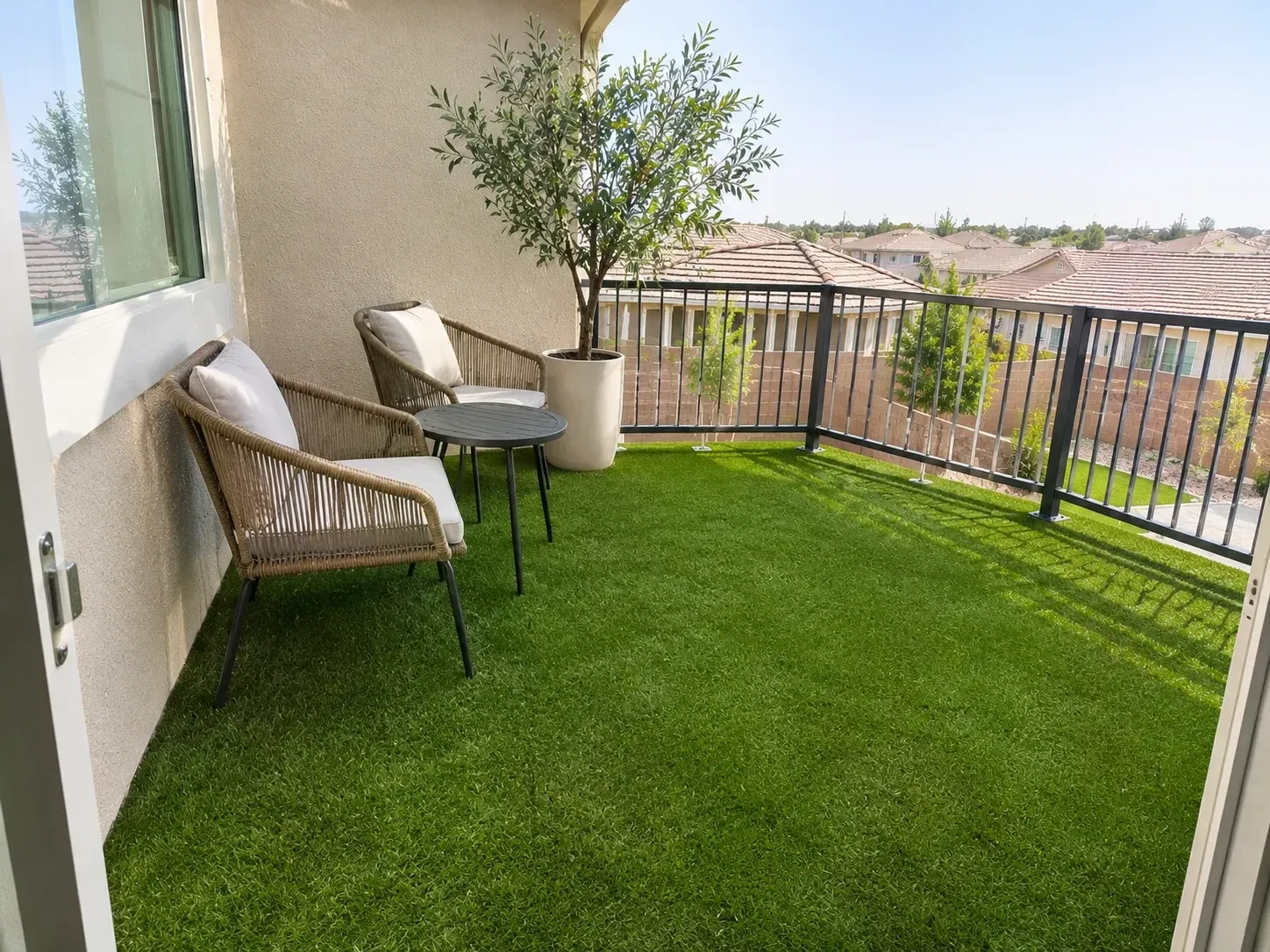
A second-floor balcony floored in artificial grass, with a metal railing, two woven chairs, a small table and a potted olive tree, overlooking tile rooftops.

Rooftop and Balcony Grass Systems

A rooftop or balcony has no soil to work with, so this build looks nothing like a ground install. In place of a compacted base, we lay a lightweight drainage-mat system directly over whatever's already there, a membrane roof, paver surface, or wood deck, routing water to the building's own drains instead of letting it collect on the grass.

We confirm two things before ordering any material: how much weight that existing surface can actually carry, and where its current drainage goes, since skipping either step on an elevated install risks real damage to whatever's underneath. Square footage on these jobs is usually modest next to a full yard, but the prep work doesn't get any less attention for it.

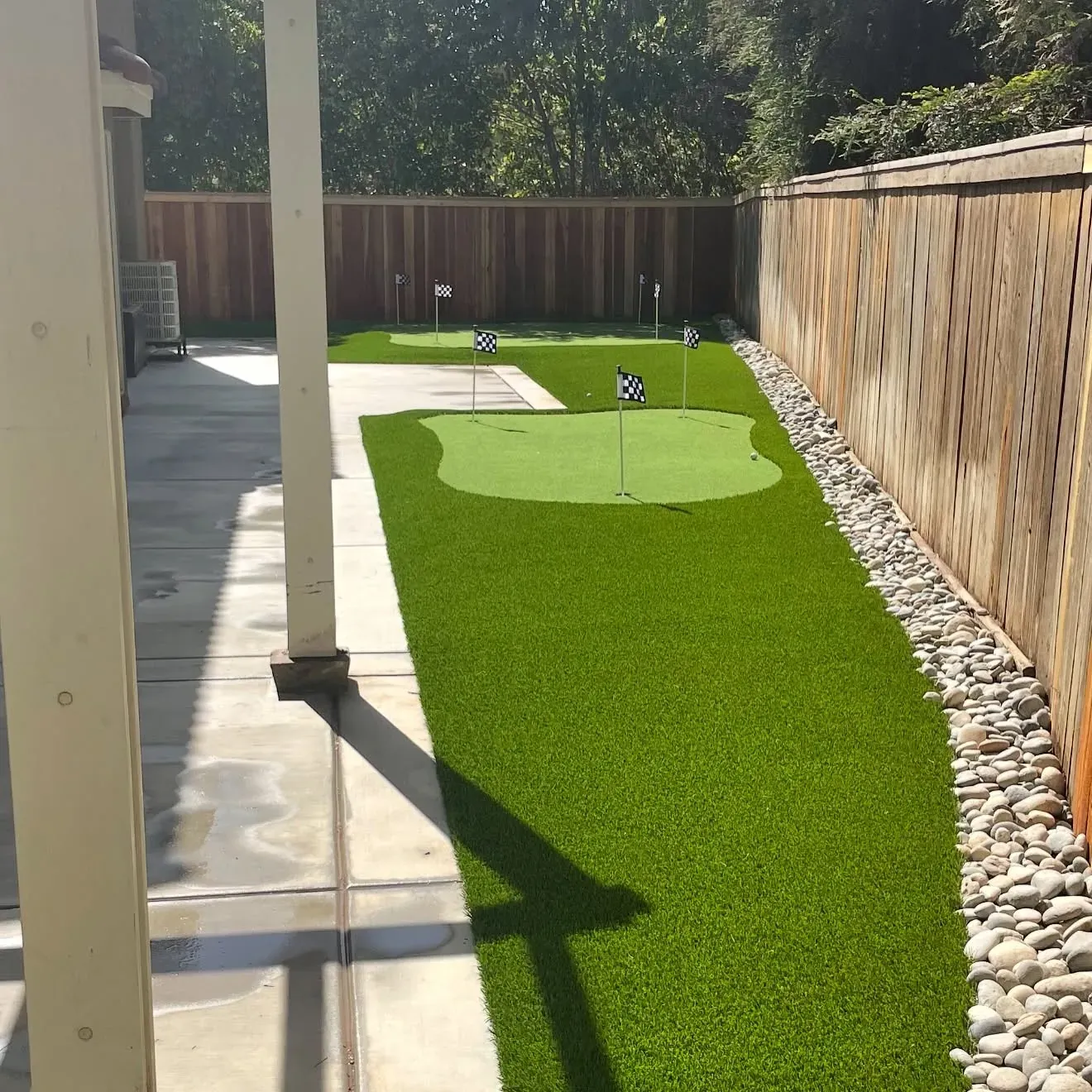
Two side-yard practice putting greens with checkered flags set into artificial grass beside a patio, with a wood fence and river-rock border.

Home Sports Courts and Athletic Grass

This category spans a range for us, half-court basketball pads, batting-cage surfaces, small multi-sport practice slabs, though the build approach stays consistent across all of them. Every one of these needs a firmer sub-base and an impact rating suited to real athletic use, landing at or below 150 G's once finished, since a surface that tests harder than that becomes a genuine injury risk.

The exact pile height and infill combination shifts by sport; a surface built for basketball and one built for soccer can call for different specs even when their pile heights look similar on paper. A few of Clovis's newer developments have put in shared multi-sport slabs as a community amenity, separate from the single-household requests we see more often.

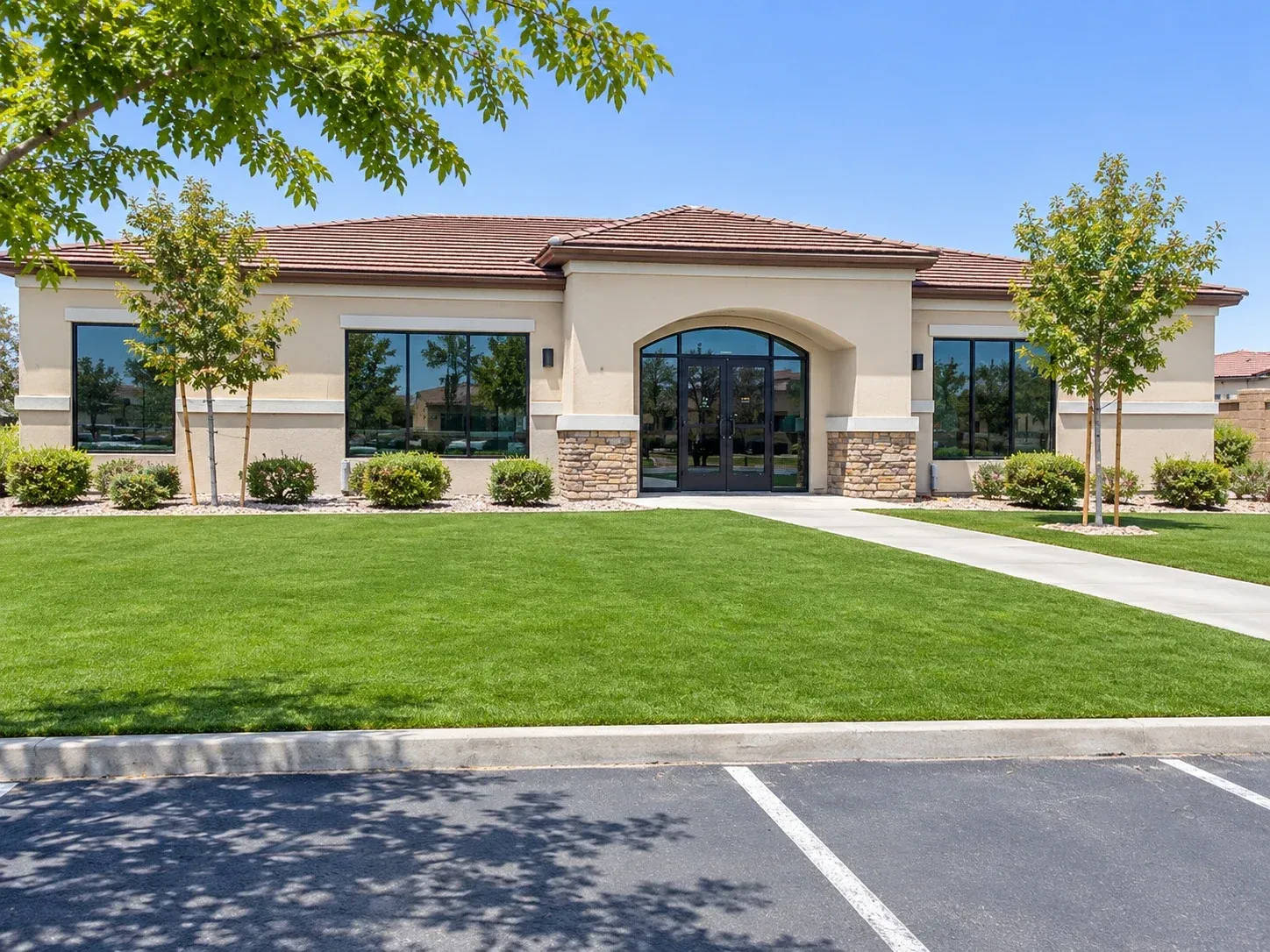
A single-storey stucco office building with a broad artificial grass lawn between the parking lot and the entrance walk, with shrubs and young trees.

Grass for Businesses and Community Properties

Clovis's steady suburban growth means commercial and HOA grass work makes up a real share of what we do, not a side request. Daily foot traffic on a commercial or HOA property runs well above what a private yard ever sees, so the product spec moves up to something built for that load, matched to a reinforced base engineered for the same repeated use.

Sign-off almost always has to happen before a crew shows up on a commercial or HOA job, so working directly with a property manager or an architectural review board is a routine part of how we schedule the work. Office parks, retail centers, and apartment communities all fall into this same category for us.

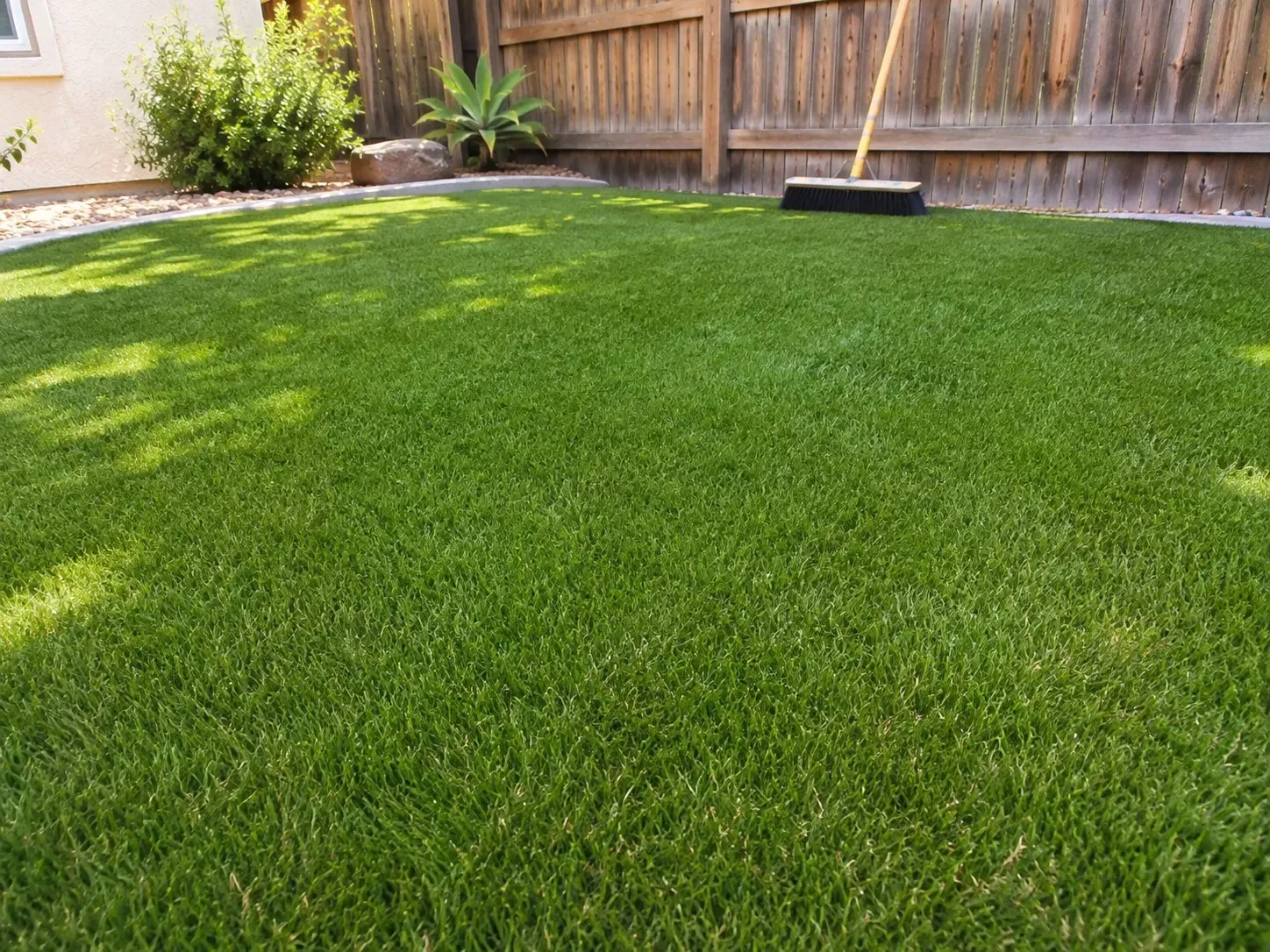
A freshly brushed artificial grass lawn with upright blades and no visible seam, with a push broom leaning against a wood fence behind.

Grass Repair and Seasonal Upkeep

Three issues account for nearly every repair call we get: a loosened seam, infill that's compacted down after years of wear, or a section that was never installed quite right to begin with. Resetting the seam, topping infill back up to its proper depth, and power-brushing the matted fiber back upright usually brings the look back without tearing anything out.

A full tear-out only earns its cost once the backing itself has broken down, usually well beyond the span the manufacturer built the product to last. We start every repair visit by diagnosing the real cause, and more often than not, what's actually wrong lives in the base or the drainage underneath, not in the grass fiber itself.

Clovis Artificial Grass's Expertise in Clovis, CA

Most of Clovis sits on a layer of hardpan clay, a dense, compacted soil type that's noticeably different from ordinary clay found elsewhere in the Central Valley. Hardpan limits both drainage and root penetration, which is exactly why a base built the way it would be for looser soil doesn't hold up here. Every yard gets graded individually, and where the hardpan layer sits close enough to the surface to interfere with drainage, we break through it at the depth that specific property actually needs rather than stopping at a standard base depth and hoping it's enough.

Clovis and the greater Fresno area also go through a long, mostly rainless summer that typically runs from June through September, with stretches of extended high heat. That combination, heat paired with a soil type that doesn't drain quickly on its own, is part of why a properly graded base matters even more here than in a climate with more frequent rain to test drainage along the way.

Under California's AB 1572, new limits on using drinking water for nonfunctional turf, ordinary lawn space that isn't used for recreation or a shared purpose, start phasing in on government-owned properties in 2027, then extend to commercial, institutional, and HOA common-area properties across 2028 and 2029. The law doesn't require removing an existing lawn; it only narrows which water source can legally irrigate that nonfunctional space once a property's deadline arrives. For a Clovis homeowner who'd rather act on their own schedule than wait for a mandate, converting that lawn space to grass removes the irrigation question from the equation entirely.

Every installation follows Synthetic Turf Council base-construction guidelines, and our crew attends the Council's Annual Conference every year to stay current on new materials and technique. A lot of installers can point to the same list of credentials. What actually separates one from another is whether they can translate those standards into plain language for the specific yard in front of them right now, and here in Clovis, that means being able to explain exactly what the hardpan layer under that yard changes about how it gets built.
Why We're the Best Artificial Grass Company in Clovis, CA

Written, Itemized Pricing on Every Project

Taking a few extra minutes to explain why a base has to run a certain depth is worth it every time, rather than having a customer sign a number they don't really understand. Our written estimates always split removal, base material, grass product, infill, and labor into separate line items instead of one lump figure, so the quote holds up next to anyone else's for a direct comparison.

That transparency counts for the most because this is a purchase most homeowners only make once or twice in a lifetime. Once someone understands what separates a properly built base from a corner-cut one, that knowledge gives them real leverage evaluating any bid they get, ours included, and that alone is worth the extra few minutes it takes to walk through.

Two Separate Warranties, Each Covering Something Different

Two separate guarantees actually come attached to a grass installation, and it's worth understanding what falls under each. Once a job wraps, the manufacturer registers a product warranty directly in the customer's name, running 11 to 15 years on the grass material itself depending on which line was installed, and that registration only holds up because the installer carries certified status with that manufacturer.

On top of that, we stand behind our own labor separately for two years, covering base depth, grading, seam quality, and drainage performance, hardpan-clay grading included. A seam that loosens or drainage that underperforms inside that two-year window gets fixed by us, at our cost, regardless of what the manufacturer's side of the coverage would or wouldn't touch.

One Crew, Start to Finish, No Subcontractors

One dedicated six-person crew carries a project from the first site visit all the way through the final walkthrough, instead of handing pieces of the job to a rotating cast of subcontractors. That consistency matters most on the steps that are easiest to rush under time pressure: grading, compaction, and seaming, since those three decide whether a lawn still looks and drains right five years later or needs a redo within two.

Having the same people measure the job and then build it closes the gap between what gets quoted and what actually shows up in the yard. It's one of the reasons our incident record across every completed project still stands at zero.

Artificial Grass Design and Installation Timeline in Clovis, CA

How Long Does Artificial Grass Installation Take?

Once the crew starts, most lawn installs in Clovis finish within 1 to 3 days, with the yard's size and existing ground conditions setting most of that range. A pet area or a patio strip, being smaller jobs, often wraps inside a single day.

Bigger jobs push the calendar out further, whether that's a putting green with tighter grading tolerances to hit or a commercial site with real acreage to cover. If anything adds a day to an estimate, it's usually one of two things: a hardpan layer that needs extra breakthrough work, or more old sod to clear than the initial walkthrough suggested.

Project Timeline & Milestones

  1. Site Visit and Measurement.

    A crew member walks the property together with you, pulls actual measurements, and talks through what the finished space has to do day to day, whether that lands on a lawn, a play surface, or a putting green, before any product gets picked.

  2. Product and Design Selection.

    Pile height, infill type, and face fiber get matched to what the walkthrough turned up, since the right product depends on how the space actually gets used day to day.

  3. Written Estimate.

    Next comes a full written proposal with removal, base, material, infill, and labor each listed as its own item, leaving nothing about the price to guesswork.

  4. Removal and Excavation.

    Existing sod or soil comes out to a 2-to-4-inch depth, the step that sets up correct drainage before any base material goes in.

  5. Hardpan Grading and Base Compaction.

    We grade the open area for drainage first, breaking through the hardpan layer where it's present, then compact a base a minimum of 2 to 3 inches thick, capping it with a weed-barrier fabric before moving on.

  6. Grass Installation and Seaming.

    The grass product is rolled out, cut to fit the space's exact dimensions, and seamed with enough care that the joints lie flat instead of shifting underfoot down the road.

  7. Infill and Grooming.

    We apply infill at the rate that specific product calls for, then finish with a power-brushing pass that stands the fibers upright for a natural look instead of a matted one.

  8. Final Walkthrough.

    You and the crew walk the finished project together, confirm the drainage is working the way it's supposed to, and we answer whatever's left before signing off on the job.

Artificial Grass Cost and Pricing in Clovis, CA

What Affects the Cost of Artificial Grass?

Pricing on nearly any job comes down to three variables: overall project size, the product grade selected, and how much the existing ground needs to be worked before any grass goes in. Clovis's hardpan clay tends to push base-prep costs up slightly compared to looser soil, since breaking through that layer takes more time and equipment than a standard base. Product grade matters just as much: a basic lawn-grade product costs less per square foot than nylon putting-green grass or a specialty pet backing, since those use pricier material and tighter manufacturing tolerances. Site access and whether a project needs HOA sign-off first can stretch the schedule a bit, though rarely the final cost by much.

How Much Does Artificial Grass Cost in Clovis?

ServicePrice RangeWhat Drives the Price
Front and Back Yard Grass$9-$18 per sq. ft. installedA basic product over a standard base sits at the low end; upgrading to a denser pile or grading deeper through hardpan clay moves it toward the top.
Putting Greens for Backyards$25-$35 per sq. ft. installedNylon face fiber and the tighter sub-base grading it needs is what the base price assumes; adding real cups, a slope break, or a fringe collar raises the total from there.
Dog-Friendly Grass and Pet Areas$10-$20 per sq. ft. installedOdor-control infill and perforated backing set the floor; a larger run or added drainage capacity for heavy pet use raises it.
Patio and Hardscape Grass$9-$16 per sq. ft. installedTight hand-cutting around pavers accounts for most of the labor time at the low end, with a decorative stone or gravel border adding to the final price.
Grass Around Pools and Spas$10-$20 per sq. ft. installedThe low end covers fiber rated for ongoing UV and pool exposure; an irregular deck shape or tighter access around the pool area is what moves a quote up from there.
Grass for Play Areas and Playgrounds$12-$22 per sq. ft. installedInfill that's passed impact testing, along with the deeper bed that comes with it, anchors the low end; a higher fall-height rating on the equipment is what raises it.
Driveway and Walkway Grass Strips$9-$16 per sq. ft. installedA denser, higher-wear base sets the starting price; longer runs or tighter paver-edge cutting add to it.
Rooftop and Balcony Grass Systems$11-$19 per sq. ft. installedA lightweight drainage-mat system costs more upfront than a traditional ground base, and limited material or crew access to a roof or balcony pushes the number up even more.
Home Sports Courts and Athletic Grass$12-$24 per sq. ft. installedThe entry price assumes a denser, shock-rated base built for genuine athletic impact; a bigger court footprint is what pushes a quote toward the top of that range.
Grass for Businesses and Community Properties$9-$18 per sq. ft. installedA reinforced base built for daily commercial foot traffic sets the entry price; larger common-area square footage or tighter site access pushes it upward.
Grass Repair and Seasonal Upkeep$300-$1,800 per visitA simple seam reset or infill refresh falls at the low end of that range; a repair that calls for pulling up and relaying a bigger section climbs toward the top.

How much do you need?

$14,000
$3K$50K

Your payment options · 2 terms available

  • Lowest Payment8.23% for 10 yr$172/moas low as
  • Lowest Rate8.14% for 5 yr$285/moas low as
Inquire Now

Estimates only, based on fixed rates offered through our third-party lending partner. Your actual rate, term and payment depend on credit approval and are set by the lender; not all applicants qualify. Rates are subject to change.

Planning Your Artificial Grass Budget

Material and labor typically take the biggest slice of a grass budget, but it's base preparation where an underfunded plan usually breaks down first, and that's even more true in Clovis given what the hardpan clay layer demands of the base. A yard carrying heavy existing sod, or sitting over an especially dense hardpan layer, simply needs more base work before any grass can go down, and the single most common reason a bargain install fails within a year or two is that this step got skipped to save money. Set the base budget first; whatever's left over can go toward an upgrade like a putting green or a specialty infill.

Hidden Costs and Additional Considerations

The most common surprise expense shows up only after removal starts, when a hidden drainage problem, an unusually dense hardpan layer, or old buried debris turns up somewhere the original estimate couldn't see from the surface. HOA review fees, where a community charges one, tend to stay modest, though it's worth asking about up front. Small add-ons, a fringe collar for a putting green, extra infill for a dog that's hard on a yard, or a decorative border around a patio, are easy to add to a quote, and they're the kind of line item that's easy to leave out when a budget first takes shape.

Financing and Payment Structure

Every estimate lays out the payment structure clearly: a deposit due at signing, with the remaining balance due once the job wraps, and the full cost and schedule put in writing before the crew ever shows up on site. Spreading the cost over time is something we're glad to discuss, so go ahead and ask about current financing options.

Proudly Serving Clovis and the Surrounding Fresno County Region

Clovis Artificial Grass takes on projects across Clovis and the surrounding Fresno County communities, including Fresno, Sanger, Reedley, Kerman, and Fowler. Wherever a job lands within that service area, it's handled by the same crew, graded to the same base standard, and quoted through the same written-estimate process.

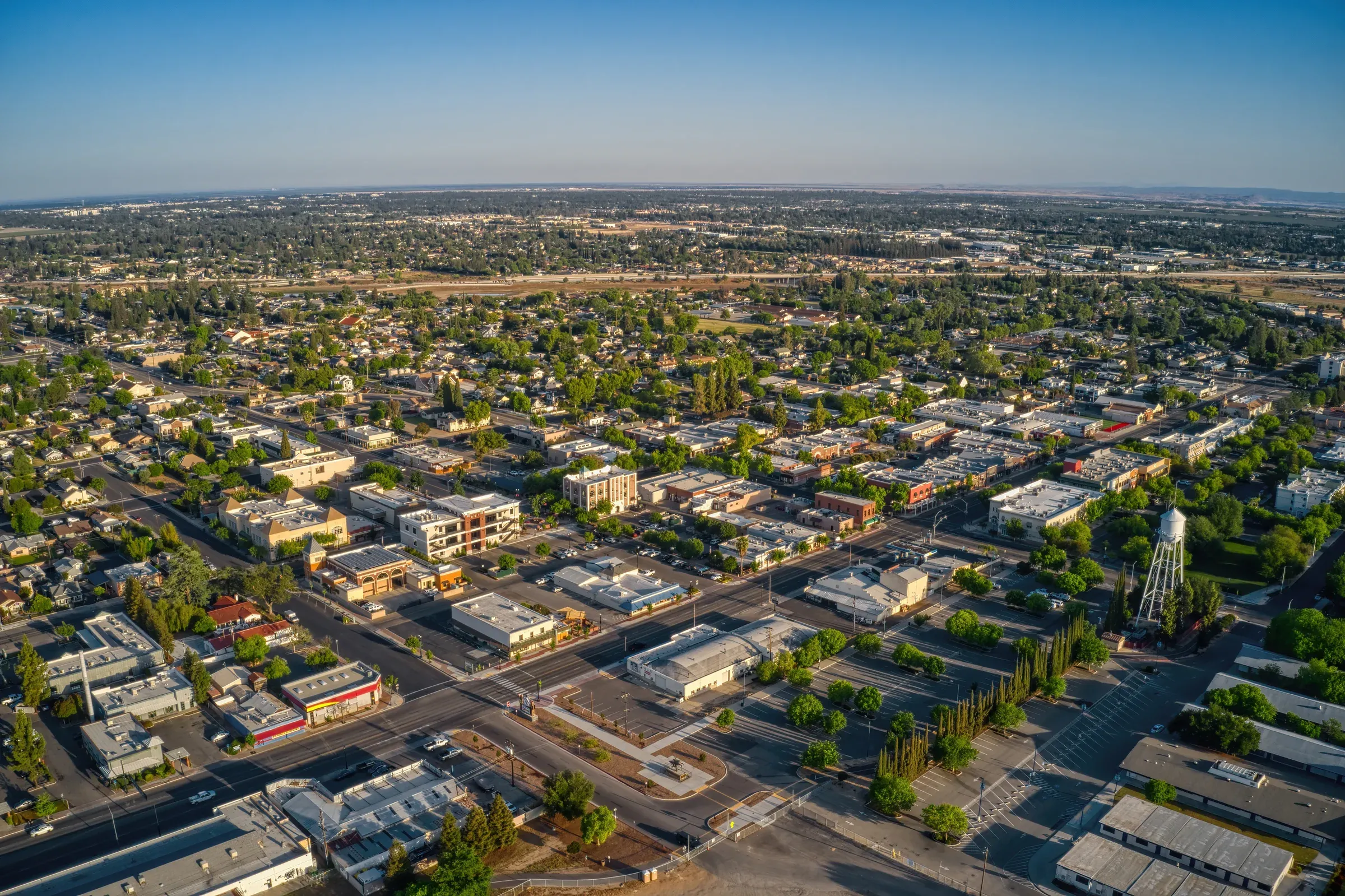
Aerial view of downtown Clovis, California, with the historic water tower, tree-lined streets and the valley stretching to the horizon.

Here's What Happy Clovis Customers Have to Say

Artificial Grass Installation FAQs

How much does artificial grass installation cost in Clovis?

What you pay depends on the grass product selected, the square footage involved, and how much base prep the existing ground needs, including any hardpan clay that has to be graded through. As a rough guide: a standard lawn runs $9-$18 per square foot, a putting green $25-$35, pet grass $10-$20, a patio accent $9-$16, grass around a pool $10-$20, a playground surface $12-$22, a driveway strip $9-$16, a rooftop or balcony system $11-$19, athletic surfacing $12-$24, and a repair or maintenance visit $300-$1,800 depending on what the job actually needs. Every quote arrives as a written, itemized breakdown before any work begins.

How long does artificial grass last before it needs replacing?

Manufacturer coverage on most residential products runs 11 to 15 years, and a correctly installed lawn with a solid base often performs well beyond that window with basic upkeep like occasional infill top-ups and power-brushing. Installation quality, more than almost any other factor, decides whether a lawn is still draining and looking the way it did on day one, years later, and that's exactly why we put so much emphasis on grading through Clovis's hardpan clay the right way.

Do you offer a warranty on artificial grass installation?

Yes, and it's really two warranties. The manufacturer's own product warranty runs 11 to 15 years depending on the line installed, and it stays active because we hold certified-installer status with the brands we carry. Separately, our own 2-year workmanship warranty covers base, grading, seams, and drainage, so if anything in our labor comes up short during that window, we fix it at no cost to you.

Does Clovis's soil affect how artificial grass gets installed?

Yes, and it's one of the main reasons base work matters so much here. Most of Clovis sits on hardpan clay, a dense layer that limits drainage more than ordinary soil, so we grade every site individually and break through that layer at the depth it actually requires instead of using one standard base depth everywhere. Skipping that step is the most common reason an under-built install starts pooling water within its first year or two.

Is artificial grass safe for kids and pets?

Yes. Every grass product and backing we use is lead-free and non-toxic. Around play structures, we build to the ASTM F1292 and F2075 impact-safety standards and test infill under ASTM F3496 for PAH content, and pet areas get a perforated backing paired with odor-control infill, so daily use by kids and dogs is never a safety concern.

What's the difference between a putting green and a regular lawn installation?

Fiber is the real difference: a putting green uses a denser nylon face rather than the polyethylene blend found in standard lawn grass, since nylon holds its shape under a rolling ball far longer. The sub-base also gets graded to a tighter tolerance for a green, because even a small, unplanned dip changes how a putt breaks. Together, those two factors are why a putting green costs meaningfully more per square foot than a standard lawn.

Can artificial grass be installed around a pool?

Yes, it's one of our more common requests across Clovis. We use a product rated to withstand constant UV and chlorine exposure, run a shorter pile for a clean line against the deck's edge, and we pay closer attention to drainage so the water swimmers track out doesn't just sit on the surface.

Is a DIY artificial grass kit worth it?

Home-improvement retailers do sell real DIY grass kits, but what those kits consistently leave out is professional-grade base construction, the single biggest factor in how well a lawn drains and how long it actually lasts, particularly over hardpan clay that needs more careful grading than a kit's instructions usually cover. Most manufacturers also won't back a full product warranty on a DIY job, since that coverage is tied to having a certified installer do the work. A small patch that sees light traffic can be a reasonable DIY candidate; anything expected to perform for the long haul without drainage problems is where a professionally built base pays for itself.

Do you offer financing for larger projects?

Where spreading a project's cost out over time would help, current financing options are on the table, and we're happy to walk through what's available right now. No matter how a customer chooses to pay, the full cost breakdown and payment schedule still arrive in writing with every estimate.

Get Clovis's Top-Rated Artificial Grass Team on the Job

Clovis Artificial Grass handles front and back yard lawns, putting greens, pet-friendly grass and dog runs, patio accents, pool-area grass, playground surfacing, and commercial installs for offices and HOAs throughout Clovis and the surrounding Fresno County region. Every job starts with a free on-site visit and ends with a workmanship warranty layered on top of whatever coverage the manufacturer already provides.

Call (559) 314-7200